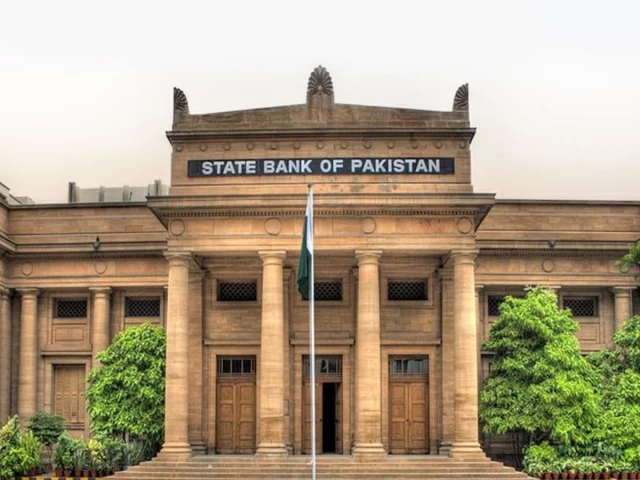
KARACHI – The State Bank of Pakistan (SBP) has raised the policy rate by 100 basis points (bps) to 11.50%. In a statement following its meeting held on Monday, the SBP’s Monetary Policy Committee (MPC) said it had decided to raise the policy rate with effect from April 28.
Earlier in March, the SBP maintained its policy rate unchanged at 10.5% following its meeting on March 9. The cautious pause in March was seen as support for ongoing macroeconomic stability efforts, building on prior rate reductions (including the 50 bps cut to 10.5% in December 2025), while allowing time to monitor energy price dynamics, domestic inflation trends, and external account resilience.
Reasons for the Hike
The decision to raise the policy rate comes amid rising inflationary pressures, largely driven by the Middle East conflict and its impact on global energy prices. The closure of the Strait of Hormuz and the subsequent spike in oil prices have fed into domestic inflation, with the Sensitive Price Indicator (SPI) showing persistent increases.
The SBP has emphasized in its previous MPC statements a balanced approach to safeguarding price stability while nurturing sustainable growth recovery. However, the current inflationary environment — exacerbated by fuel price hikes, energy tariff adjustments, and supply chain disruptions — has prompted a tightening of monetary policy.
Impact on Borrowing Costs
The 100 bps increase will raise borrowing costs for businesses and consumers. For businesses, higher interest rates increase the cost of working capital and investment loans, potentially slowing economic activity. For consumers, variable-rate loans — including mortgages and personal loans — will become more expensive.
Impact on Savings
Higher interest rates benefit savers, as bank deposits will earn higher returns. However, with inflation still elevated, real returns may remain negative.
Market Reaction
The stock market is likely to react negatively to the rate hike, as higher borrowing costs reduce corporate profitability. The bond market may see yields rise. The rupee may benefit from higher rates, as foreign investors are attracted to higher yields.
Analysis: A Necessary Tightening
The SBP’s decision to raise the policy rate by 100 bps is a necessary tightening in response to inflationary pressures. The Middle East conflict has disrupted global energy supplies, and Pakistan — a net importer of oil — has been heavily affected.
The government has already increased fuel prices, electricity tariffs, and gas rates. The pass-through of these increases to consumer prices has been significant. The SBP’s role is to prevent these supply-side shocks from becoming entrenched as generalised inflation.
The MPC’s statement noted that the decision was based on a “balanced approach to safeguarding price stability while nurturing sustainable growth recovery.” In practice, the SBP has prioritised price stability over growth.
The risk is that higher interest rates could slow economic activity at a time when growth is already fragile. But the alternative — allowing inflation to spiral — would be worse.
As the ceasefire holds and the Strait of Hormuz reopens, global oil prices may stabilise. But the impact of the past two months of disruption will take time to reverse. The SBP has acted preemptively; the question is whether the 100 bps increase will be sufficient.