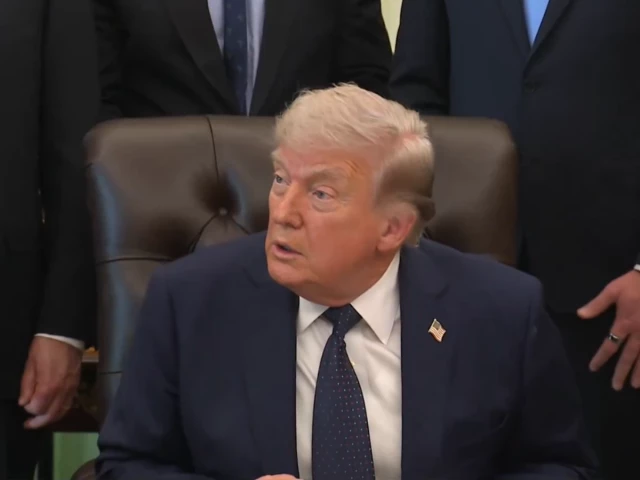
WASHINGTON: Donald Trump said on Monday that the fragile ceasefire between the United States and Iran was “on life support” after sharply rejecting Tehran’s latest response to a US-backed peace proposal, escalating fears of a prolonged regional conflict and renewed disruption to global oil supplies.
The comments came as tensions continued to rise across the Middle East following weeks of military confrontation involving Iran, the United States, Israel, and Iran-backed groups across the region.
Speaking to Fox News, Trump dismissed Iran’s response as unacceptable and accused Tehran of failing to engage seriously in diplomatic efforts aimed at ending the conflict.
“I would call it the weakest right now. After reading that piece of garbage they sent us, I didn’t even finish reading it,” Trump said while describing the current status of the ceasefire. “It’s on life support.”
The US president also warned that reopening and securing shipping lanes through the Strait of Hormuz would likely require a broader military operation if diplomacy failed.
Trump said he was considering reviving “Project Freedom,” a plan reportedly linked to securing maritime routes in the Gulf region, although he suggested any intervention would go beyond simply escorting commercial vessels.
Despite the heightened rhetoric, Trump claimed Iran’s leadership would eventually retreat from its hardline position.
“They’re going to fold,” he said.
When asked whether he could continue negotiations with Iran’s current leadership, Trump responded: “I will deal with them until they make a deal.”
Trump further alleged that Iranian negotiators admitted they lacked the technical capability to clean up radioactive contamination at nuclear facilities damaged during the conflict, claiming the United States would need to recover the remaining “nuclear dust.”
Meanwhile, Iran defended its proposal and accused Washington of maintaining unreasonable demands that undermined regional stability.
At a press conference in Tehran, Iranian Foreign Ministry spokesperson Esmaeil Baghaei described Iran’s peace proposal as “legitimate and generous,” insisting that Tehran’s demands focused on ending the war, lifting sanctions, and restoring regional security.
“Our demand is legitimate: demanding an end to the war, lifting the blockade and releasing Iranian assets unjustly frozen under US pressure,” Baghaei said.
He added that Iran’s proposal also included guarantees for safe passage through the Strait of Hormuz and efforts to stabilise the wider Middle East, including Lebanon.
According to Baghaei, Tehran’s response to Washington was not excessive and reflected Iran’s willingness to pursue diplomacy while defending national interests.
“Whenever we are forced to fight, we will fight, and whenever there is room for diplomacy, we will seize that opportunity,” he said.
Baghaei also criticised Trump’s rejection of the proposal, warning that continued US pressure could further destabilise the region and damage global economic security.
The latest standoff has already triggered renewed volatility in global oil markets. Oil prices surged by more than $4 per barrel following Trump’s rejection of Tehran’s response, as investors worried that the Strait of Hormuz could remain largely paralysed.
Before the conflict erupted in February, nearly one-fifth of the world’s oil and liquefied natural gas shipments passed through the strategic waterway, making it one of the most important maritime trade routes in the world.
Despite tensions, some commercial tanker traffic has reportedly resumed. Iranian media claimed an Iraqi oil tanker successfully crossed the Strait of Hormuz through Iranian-designated maritime routes, although overall shipping traffic remains significantly lower than pre-war levels.
At the same time, the diplomatic battle has expanded internationally.
China strongly opposed new US sanctions imposed on three China-based companies accused by Washington of supporting Iranian military operations. Chinese Foreign Ministry spokesperson Guo Jiakun called the sanctions unilateral and illegal while pledging to protect the rights of Chinese businesses.
“The pressing priority is to prevent a relapse into fighting rather than using the war to smear other countries,” Guo said during a briefing in Beijing.
Iran also confirmed that Foreign Minister Abbas Araghchi recently visited China to discuss regional security and diplomatic developments ahead of Trump’s upcoming visit to Beijing.
According to Iranian officials, China views stability in the Persian Gulf and Gulf of Oman as critical to global economic security and is expected to warn against further escalation by the United States.
Meanwhile, Iran and Saudi Arabia held high-level discussions regarding the ongoing Pakistan-mediated diplomatic process between Tehran and Washington.
Iranian state media reported that Araghchi and Saudi Foreign Minister Faisal bin Farhan Al Saud spoke by phone for the second time in 24 hours to discuss efforts aimed at reducing tensions.
The crisis has also placed pressure on European governments, with reports suggesting several countries are considering deploying naval assets to help secure shipping routes in the Gulf region.
Baghaei warned European states against becoming directly involved militarily, arguing that any intervention in the Strait of Hormuz could worsen instability and further increase global energy prices.
“This war is not only unethical but unlawful,” he said. “Any intervention in the Strait of Hormuz or the Persian Gulf would bring further complications.”
The conflict has additionally intensified fighting in southern Lebanon, where clashes continue between Israel and the Iran-backed militant group Hezbollah despite previous ceasefire arrangements.
Israeli Prime Minister Benjamin Netanyahu said the war was not over and insisted more work remained to dismantle Iran’s nuclear capabilities and address ballistic missile threats.
Iranian President Masoud Pezeshkian responded by declaring that Iran would “never bow down to the enemy” and would continue defending its national interests.
With Trump expected to arrive in Beijing later this week for talks with Chinese President Xi Jinping, the Iran crisis is expected to dominate discussions as world powers seek ways to prevent further escalation and protect global economic stability.