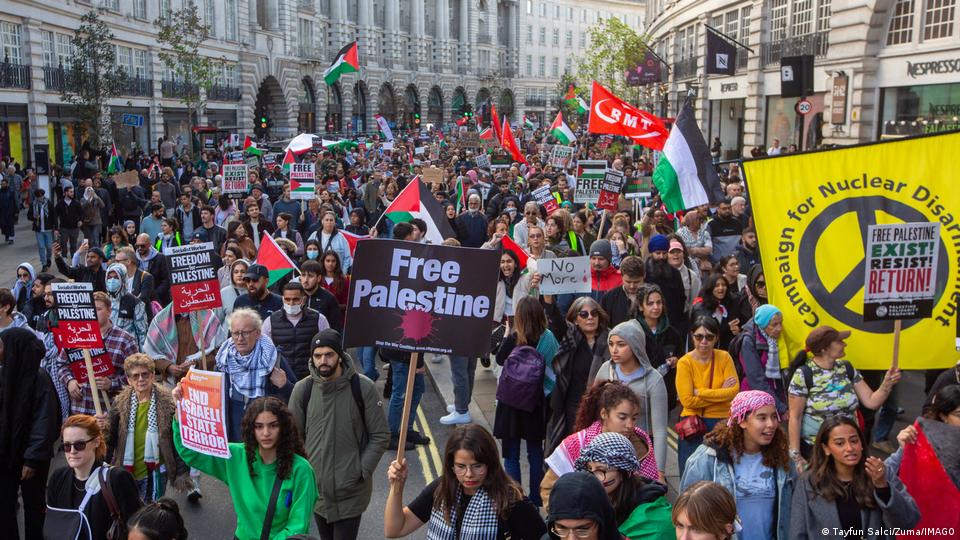
LONDON, March 11, 2026 — The British government has taken the rare step of banning the annual Al-Quds Day march in London, marking the first time since 2012 that a protest procession has been prohibited, as authorities warn that the volatile situation in the Middle East could trigger serious public disorder .
Home Secretary Shabana Mahmood approved a request from the Metropolitan Police late Tuesday to prohibit the march, which was scheduled for this Sunday, March 15. The ban, effective for one month from Wednesday, applies to the Al-Quds procession and any associated counter-protests .
However, due to a legal distinction in British law, a static demonstration—where protesters assemble but do not march—will still be permitted, though subject to strict police conditions .
‘Uniquely Contentious’ Context
The Metropolitan Police described the Al-Quds march as “uniquely contentious,” noting that it originated in Iran in 1979 and is organized in London by the Islamic Human Rights Commission (IHRC) , an organization the force characterized as “supportive of the Iranian regime” .
Assistant Commissioner Ade Adelekan, the Met’s public order lead, emphasized that the decision was not taken lightly. “The threshold to ban a protest is high and we do not take this decision lightly; this is the first time we have used this power since 2012,” he said in a statement .
The Met cited multiple factors in its risk assessment:
- The likely convergence of high numbers of protesters and counter-protesters
- “Extreme tensions” between different factions
- The volatile situation in the Middle East, with Iran attacking British allies overseas
- Recent National Security Act arrests of individuals allegedly spying on Jewish communities for Iran
- A weekend stabbing involving individuals with opposing views on the Iranian regime
“In our assessment this march raises unique risks and challenges,” Adelekan added. “The context is so uniquely complex and the risks are so severe that placing conditions on the protest will not be sufficient to prevent it from resulting in serious public disorder” .
Home Secretary: ‘Full Force of the Law’
Home Secretary Shabana Mahmood, the first Muslim woman to hold the office, defended the prohibition as a necessary measure to prevent serious public disorder.
“I am satisfied doing so is necessary to prevent serious public disorder, due to the scale of the protest and multiple counter-protests, in the context of the ongoing conflict in the Middle East,” Mahmood said in a statement .
She emphasized that while peaceful protest remains a protected right, there are limits. “I expect to see the full force of the law applied to anyone spreading hatred and division instead of exercising their right to peaceful protest,” she added .
Organizers Cry Foul
The Islamic Human Rights Commission strongly condemned the decision, vowing to challenge it legally.
In a statement, the IHRC said it “strongly condemns the decision by the Metropolitan Police to ban the Al-Quds Day March” and confirmed that a static protest would still proceed on Sunday .
“The police have brazenly abandoned their sworn principle of policing without fear or favour, and have capitulated to the pressure of the Zionist lobby,” the IHRC alleged. “In essence, this is a politically charged decision; not one taken for the security of the people of London” .
Faisal Bodi of the IHRC told the BBC’s The World Tonight program that a ban would represent “a sad day for freedom of expression, freedom of assembly and the right of people to legitimately protest about issues they feel strongly about.” He noted the demonstration had taken place peacefully for 40 years .
Political Pressure and Support
The decision followed mounting pressure from both Labour and Conservative MPs. Courts minister Sarah Sackman said earlier this week that people expressing support for “the malign regime in Iran” should not be “on the streets of London calling for hate and hostility against this country” .
Shadow Home Office minister Alicia Kearns also called for the march to be cancelled, arguing there was “no place in our country for the celebration of terrorists” .
The IHRC’s recent expressions of support for the late Iranian Supreme Leader Ayatollah Ali Khamenei—killed in US-Israeli strikes on Feb. 28—drew particular scrutiny. Following his death, the group described Khamenei as “a rare role model” who would be “mourned by freedom loving people all over the world” .
The Campaign Against Antisemitism welcomed the ban, calling it “a positive development” and stating: “Allowing this hate-fest to go ahead would have sent the message that Islamists rule the roost in Britain” .
Legal Framework: Why a March Can Be Banned but a Static Protest Cannot
The distinction between banning a moving procession and a static assembly is rooted in the Public Order Act 1986. While Section 13 allows the Home Secretary to prohibit all public processions (or any class of them) for up to three months if serious public disorder is deemed unavoidable, there is no equivalent power to ban a static assembly .
However, police can impose “strict conditions” on static protests under Section 14 of the same Act, including restrictions on location, duration, and noise levels .
Former Met chief superintendent Dal Babu told the BBC that the weekend would be “extremely challenging” for police. “An outright ban is extremely unusual and I think we need to trust the police, trust their judgment,” he said .
What Happens Sunday
The Met has warned that even with the ban in place, the coming weekend will be “challenging, potentially violent.” Officers from around the country will support London police, and there will be an increased presence in affected areas .
“Anyone who attempts to form or join a march or incite others to will be committing a criminal offence and should expect arrest,” Adelekan warned .
The IHRC has urged supporters to continue preparations, stating: “All preparations must continue as planned. We are seeking legal advice and this decision will not go unchallenged” .
Al-Quds Day, named after the Arabic word for Jerusalem, was initiated by Iran’s revolutionary leader Ayatollah Ruhollah Khomeini in 1979 as a show of support for Palestinians and opposition to Israel’s occupation of east Jerusalem . It is now marked annually in various countries, particularly across the Muslim world.