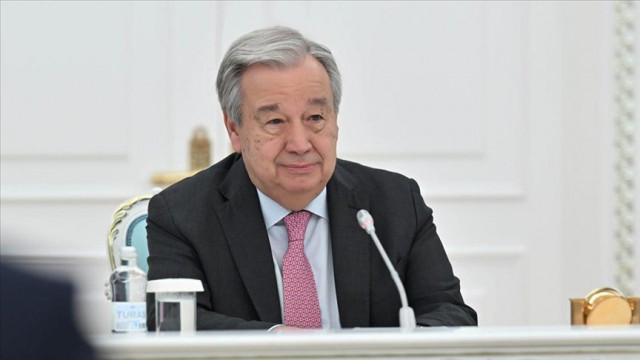
António Guterres has strongly condemned the deadly terrorist attack targeting a passenger train in Quetta, calling terrorism in all forms “unacceptable” and urging that those responsible be brought to justice.
The condemnation came after a powerful explosion struck a passenger shuttle train near Chaman Phatak on Sunday, killing at least 14 people and injuring 20 others in one of the deadliest attacks in Quetta in recent months.
UN Expresses Solidarity With Pakistan
In a statement shared on X, the UN Secretary-General emphasized the need for accountability and international solidarity.
“The United Nations stands in solidarity with the people and the Government of Pakistan,” Guterres said.
He stressed that:
- Terrorism in all forms remains unacceptable
- Perpetrators must be identified
- Facilitators and financiers should face justice
The attack has intensified concerns over rising militant violence in Balochistan, where security forces and civilians have repeatedly been targeted in recent years.
Blast Targeted Passenger Shuttle Train
According to officials, the explosion occurred early Sunday morning as the train travelled from:
- Quetta Cantonment Railway Station
towards: - Quetta Railway Station
The blast tore through the train near the Chaman Phatak area, causing extensive casualties and panic among passengers.
Among those killed were:
- Three personnel of the Frontier Corps (FC)
Rescue teams and security forces rushed to the scene shortly after the explosion.
One of Quetta’s Deadliest Recent Attacks
Officials described the bombing as one of the most serious terrorist incidents in Quetta in recent months.
Security agencies launched investigations to determine:
- The nature of the explosive device
- Possible militant involvement
- Security lapses
- Potential facilitators
The attack comes amid heightened security alerts across Balochistan following warnings about possible militant activity targeting transport routes and security personnel.
Pakistani Leadership Condemns Attack
Senior Pakistani political and military leadership strongly condemned the bombing.
Those issuing statements included:
- Asif Ali Zardari
- Shehbaz Sharif
- Ishaq Dar
- Sarfraz Bugti
- Sohail Afridi
Leaders vowed that terrorism would be defeated and pledged continued operations against militant networks.
International Community Joins Condemnation
Several foreign governments and diplomatic missions also condemned the attack.
Statements of solidarity came from:
- China
- Iran
- United Kingdom
- Russia
Diplomatic missions expressed condolences to victims’ families and reaffirmed support for Pakistan’s counterterrorism efforts.
Human Rights Groups Raise Security Concerns
The Human Rights Commission of Pakistan (HRCP) also voiced alarm over deteriorating security conditions in Balochistan.
The commission called for:
- Stronger civilian protection
- Accountability measures
- Improved security planning
- Protection of public transport infrastructure
Rights groups warned that repeated attacks on civilian targets continue creating fear and instability in the province.
Transport Infrastructure Increasingly Vulnerable
Railway systems and transport routes have increasingly become targets for militant attacks because they:
- Carry large civilian populations
- Symbolize state infrastructure
- Disrupt economic activity
- Generate nationwide attention
Security experts say attacks on public transport create both psychological and operational pressure on authorities.
Balochistan Remains Security Flashpoint
Balochistan has long faced security challenges involving:
- Militancy
- Separatist violence
- Cross-border threats
- Attacks on infrastructure
- Targeting of security personnel
The province’s strategic importance has grown further due to:
- Regional trade corridors
- Border routes
- Infrastructure projects
- Connectivity initiatives
Authorities have intensified counterterrorism operations across the province in response to recent security threats.
Analysis: Quetta Attack Highlights Persistent Security Challenges
The deadly train bombing once again highlights the fragile security situation in Pakistan’s western regions despite ongoing counterterrorism operations.
The targeting of civilian transportation infrastructure signals an attempt by militant groups to:
- Undermine public confidence
- Disrupt mobility
- Challenge state authority
- Generate international attention
The swift condemnation by the United Nations and multiple foreign governments also demonstrates growing international concern over regional security stability.
Analysts say Pakistan faces the difficult challenge of balancing:
- Counterterrorism operations
- Civilian protection
- Economic activity
- Infrastructure security
while preventing militant groups from exploiting regional instability.
The attack additionally reinforces concerns that Balochistan’s transportation and strategic infrastructure corridors may remain vulnerable targets unless intelligence coordination and preventive security measures are significantly strengthened.