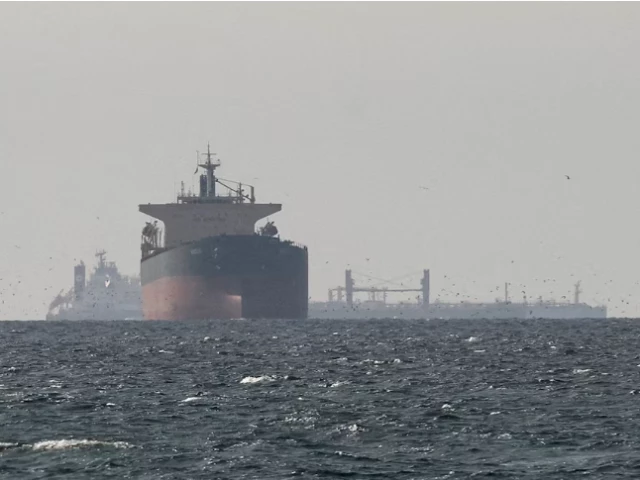
Efforts by Western allies to safeguard one of the world’s most critical energy corridors are facing mounting challenges, as experts warn that protecting the Strait of Hormuz could prove far more difficult than previous missions in the region.
The warning comes as tensions escalate following Iran’s partial blockade of the waterway, a move that has already disrupted global energy supplies and triggered sharp volatility in oil markets. The situation is drawing comparisons to earlier Western-led operations in the Red Sea, where billions were spent with limited long-term success.
Lessons from the Red Sea: A Costly and Incomplete Mission
Western military coalitions previously attempted to secure shipping lanes in the Red Sea against attacks by Houthis militants.
Despite deploying advanced naval assets and intercepting hundreds of drones and missiles, the mission yielded mixed results. At least four commercial vessels were sunk between 2024 and 2025, and shipping companies largely abandoned the route, opting for longer, costlier detours around Africa.
The operation reportedly cost over $1 billion in military resources, raising serious concerns about the sustainability of similar efforts elsewhere.
Analysts now describe the campaign as a “tactical success but strategic stalemate,” highlighting the limits of military power in securing global trade routes.
Hormuz: A Far More Complex Battlefield
The stakes in the Strait of Hormuz are significantly higher. The narrow waterway handles roughly 20% of the world’s oil and liquefied natural gas shipments, making it indispensable to global energy markets.
Unlike the Houthis, Iran possesses a far more advanced and diversified military capability. Its forces, including the Islamic Revolutionary Guard Corps, are equipped with:
- Ballistic missiles
- Swarms of low-cost drones
- Naval mines
- Fast attack boats and mini-submarines
Geography also favors Iran. Its mountainous coastline runs close to the shipping lane, allowing rapid deployment of drones and missiles that can strike vessels within minutes.
Experts warn that defending ships in such a confined and high-risk environment presents unprecedented operational challenges.
Military Constraints and Strategic Risks
Securing the strait would require a massive and sustained military presence. Analysts estimate that up to a dozen large warships—supported by aircraft, drones, and surveillance systems—would be needed to provide effective protection.
However, even advanced naval forces face limitations.
“A destroyer can intercept missiles, but it cannot simultaneously handle mines, drone swarms, and electronic warfare threats,” one maritime analyst noted.
The complexity of threats—from underwater mines to aerial drones—means that no single system can provide comprehensive defense.
The risks are not just financial. A direct hit on a Western warship could result in significant casualties and escalate the conflict dramatically.
Global Energy Markets on Edge
The partial closure of the Strait of Hormuz has already sent shockwaves through international markets.
Oil prices have surged amid fears of prolonged disruption, with analysts warning that shortages could soon follow if the situation persists. The ripple effects are expected to impact:
- Fuel prices worldwide
- Food supply chains
- Manufacturing and transportation costs
“There is no substitute for the Strait of Hormuz,” said a senior Gulf energy executive, emphasizing the route’s irreplaceable role in global trade.
Without a swift resolution, the crisis could trigger a broader economic slowdown.
Diplomatic Efforts and Divisions Among Allies
The crisis has prompted urgent discussions at the United Nations Security Council, where member states are debating possible measures to secure the waterway.
Some countries, including Gulf allies, have advocated for robust action, potentially including military intervention. Others remain cautious, wary of escalating tensions with Iran.
Meanwhile, Donald Trump has taken a mixed approach—initially suggesting U.S. naval escorts for commercial vessels, before calling on other nations to take the lead.
This lack of a unified strategy has further complicated efforts to ensure safe passage through the strait.
Iran’s Strategic Leverage
Iran’s position in the conflict is strengthened by its ability to disrupt a chokepoint critical to the global economy.
Reports indicate that Tehran may even consider imposing transit fees on vessels passing through the strait—effectively leveraging its geographic advantage for economic and political gain.
The country has also demonstrated its willingness to target energy infrastructure in neighboring Gulf states, further raising the stakes.
By maintaining pressure on the waterway, Iran holds significant leverage in ongoing geopolitical negotiations.
Comparison: Red Sea vs. Hormuz
The contrast between the two maritime crises highlights why the current situation is more dangerous:
| Factor | Red Sea | Strait of Hormuz |
|---|---|---|
| Main Threat | Houthis | Iran (state actor) |
| Military Capability | Limited | Advanced, multi-domain |
| Geographic Complexity | Moderate | Highly constrained |
| Global Impact | Regional trade | Global energy supply |
| Outcome | Partial failure | Unresolved, escalating |
This comparison underscores the scale of the challenge now facing Western powers.
Short Analysis: A Strategic Dilemma with No Easy Solution
The Strait of Hormuz crisis presents a complex dilemma. Military intervention could restore shipping but risks escalating into a broader war. Diplomatic efforts, meanwhile, are slow-moving and uncertain.
Western allies must balance immediate economic needs with long-term geopolitical stability.
The failure to fully secure the Red Sea serves as a cautionary tale: even sustained military campaigns may not guarantee strategic success.
Global Impact: Why the World Is Watching Closely
The implications of the crisis extend far beyond the Middle East:
- Energy Security: Disruptions could affect billions of consumers worldwide
- Economic Stability: Rising costs may fuel inflation globally
- Geopolitical Tensions: Increased risk of direct confrontation between major powers
- Shipping Industry: Longer routes and higher insurance costs
As one of the world’s most critical chokepoints remains unstable, the global economy hangs in the balance.
The struggle to secure the Strait of Hormuz highlights the growing complexity of modern geopolitical conflicts.
With lessons from the Red Sea still fresh, Western powers face a daunting challenge—one that may redefine the limits of military and diplomatic influence in safeguarding global trade.
For now, the world watches as a high-stakes standoff unfolds, with consequences that could ripple across economies and borders alike.