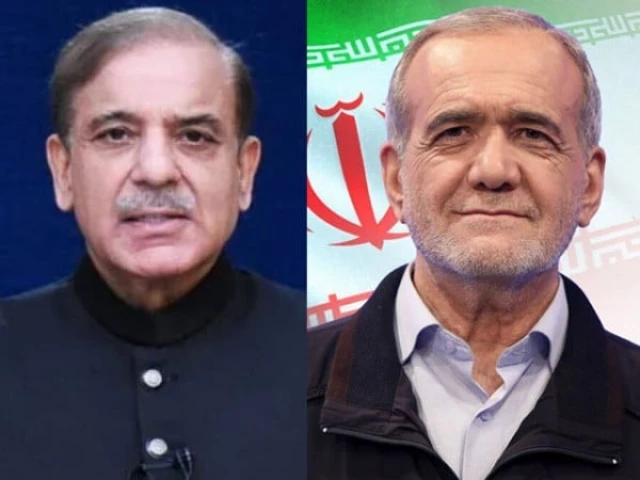
Prime Minister Shehbaz Sharif held an hour-long telephone conversation with Iranian President Masoud Pezeshkian on Saturday, reaffirming Pakistan’s solidarity with Iran and briefing Tehran on Islamabad’s intensifying diplomatic outreach to de-escalate the five-week-old conflict. The call comes as Pakistan positions itself as a key mediator between Iran and the United States, with the foreign ministers of Saudi Arabia, Turkiye, and Egypt set to arrive in Islamabad this weekend for high-level consultations on ending the hostilities.
ISLAMABAD – Pakistan’s diplomatic campaign to broker an end to the US-Israeli war on Iran entered a critical phase Saturday as Prime Minister Shehbaz Sharif held an extensive telephone conversation with Iranian President Masoud Pezeshkian. According to a statement posted by the Government of Pakistan on X, the two leaders discussed the evolving regional situation in detail, with a particular focus on ongoing hostilities and prospects for peace.
Shehbaz strongly condemned “the continued Israeli attacks on Iran, including recent strikes on civilian infrastructure,” reaffirming Pakistan’s solidarity and support for the Iranian people during what he described as a “challenging time.” The prime minister also conveyed condolences over the reported loss of more than 1,900 lives and prayed for the recovery of the injured and displaced.
A Diplomatic Blitz
The prime minister’s call with President Pezeshkian is the latest in a series of high-level engagements by Pakistan’s civilian and military leadership aimed at de-escalating the conflict. Shehbaz briefed the Iranian president on Pakistan’s ongoing diplomatic outreach, which includes engagements with the United States as well as “brotherly” Gulf and Islamic countries. The efforts, he said, are aimed at creating a conducive environment for dialogue and eventual peace talks.
Shehbaz highlighted what Islamabad sees as growing international endorsement of its peace initiative, expressing hope that collective efforts could help chart a viable path toward ending the conflict. The prime minister’s optimism appears to be grounded in the increasing coordination among regional powers, with Pakistan, Saudi Arabia, Turkiye, and Egypt aligning their mediation efforts.
President Pezeshkian, while appreciating Pakistan’s diplomatic role, shared Tehran’s perspective on the hostilities and underscored the importance of trust-building as a prerequisite for meaningful negotiations. He praised Islamabad’s efforts and its supportive stance in pursuit of regional peace.
Regional Foreign Ministers to Converge on Islamabad
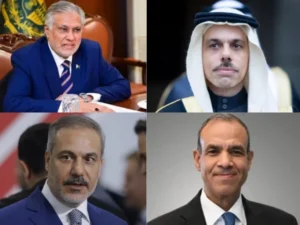
In a parallel development that underscores Islamabad’s increasing diplomatic activity, the Foreign Office announced that the foreign ministers of Saudi Arabia, Turkiye, and Egypt will visit Pakistan on March 29-30 for consultations. Saudi Foreign Minister Prince Faisal bin Farhan Al Saud, Turkish Foreign Minister Hakan Fidan, and Egyptian Foreign Minister Dr. Badr Abdelatty are expected to hold in-depth discussions with Pakistani leadership on a range of issues, including efforts to de-escalate regional tensions. The visiting dignitaries will also call on Prime Minister Shehbaz Sharif.
The simultaneous visits represent the culmination of weeks of intensive diplomatic engagement by Pakistan, which has been facilitating backchannel communications between Tehran and Washington since the conflict began on February 28. The four nations have all been involved in trying to mediate between the two adversaries, and each is acutely vulnerable to threats to energy supplies and trade routes arising from the conflict.
Turkish Foreign Minister Hakan Fidan, speaking ahead of the visit, indicated that the meeting would seek to establish a mechanism aimed at de-escalation, discussing “where the negotiations in this war are heading and how these four countries assess the situation and what can be done.”
The 15-Point Proposal and Iran’s Conditions
At the center of the diplomatic efforts is a 15-point US proposal that has been conveyed to Tehran through Pakistani intermediaries. According to reports, the proposal addresses Iran’s nuclear and ballistic missile programs, as well as maritime security in the Strait of Hormuz.
Iran’s demands, however, extend beyond what the US has reportedly offered. Tehran is seeking guarantees against future military action, compensation for wartime losses, and formal recognition of its control over the Strait of Hormuz—a position Iran’s military has reinforced by declaring that the strait “will not return to the past.”
While one Iranian official has dismissed the US proposal as “one-sided and unfair,” the fact that President Pezeshkian engaged in an hour-long conversation with Prime Minister Shehbaz and expressed appreciation for Pakistan’s diplomatic role suggests that Tehran remains engaged with the mediation process.
Pakistan’s Unique Position
Pakistan’s emergence as a key mediator stems from its unique relationships with all the major stakeholders. Islamabad maintains close ties with the Trump administration, has deep connections with Iran, and enjoys trusted partnerships with Gulf states. This combination of relationships is rare among regional powers and positions Pakistan to serve as a bridge between adversaries.
On Tuesday, Prime Minister Shehbaz publicly offered Pakistan as a venue for US-Iran peace talks—an offer that received an extraordinary boost when President Donald Trump reposted it on his Truth Social platform, a move widely seen in Islamabad as Washington’s tacit endorsement of Pakistan’s emerging role.
On Thursday, Deputy Prime Minister and Foreign Minister Ishaq Dar confirmed that indirect communication between the US and Iran was underway through messages being relayed by Pakistan, with Turkiye and Egypt also assisting diplomatic efforts.
China’s Endorsement
Pakistan’s mediation role has also received strong endorsement from China. Foreign Minister Ishaq Dar held a telephonic conversation with Chinese Foreign Minister Wang Yi on Saturday, during which Wang expressed appreciation for Pakistan’s “unremitting efforts to de-escalate the Iranian situation” and supported Pakistan in continuing to play its role as a mediator.
The two sides agreed to work together to promote a ceasefire, resume peace talks, ensure the safety of non-military targets and shipping routes, and support the United Nations. China’s backing adds significant weight to Pakistan’s mediation efforts, particularly given Beijing’s close relationship with Tehran and its status as a permanent member of the UN Security Council.
The Stakes: A Region in Crisis
The intensified diplomatic push comes as the five-week-old conflict continues to exact a devastating toll. According to figures cited by Iranian officials, more than 1,900 people have been reported killed since US-Israeli strikes began on February 28. Iran has retaliated with waves of drone and missile strikes targeting Israel and Gulf countries hosting US military assets.
The closure of the Strait of Hormuz has driven global oil prices above $100 a barrel, with ripple effects felt as far away as Pakistan, where short-term inflation jumped 8.24% year-on-year for the week ended March 26. Iraq’s oil production has been slashed from 3.3 million barrels per day to just 900,000 barrels, and in Lebanon, Israeli strikes have displaced more than one million people, including an average of 19,000 children displaced daily.
The US has reported billions of dollars in military equipment losses, and the White House has warned that President Trump is prepared to “unleash hell” on Iran if Tehran fails to accept the “reality of the current moment.”
Analysis: A Critical Diplomatic Window
Prime Minister Shehbaz Sharif’s hour-long conversation with Iranian President Pezeshkian, coming just days before the arrival of Saudi, Turkish, and Egyptian foreign ministers in Islamabad, signals that Pakistan is seizing a critical diplomatic window to end the Middle East conflict.
For Pakistan, the stakes are immense. Success would cement Islamabad’s status as an indispensable regional mediator, strengthen its relationships with both Washington and Tehran, and potentially ease the economic pressures—soaring inflation, fuel shortages, and fiscal strain—that the conflict has imposed on the country. Failure would expose the limits of Pakistan’s diplomatic reach and leave the nation to bear the continuing costs of a war it cannot control.
For the mediating quartet of Pakistan, Saudi Arabia, Turkiye, and Egypt, the challenge is to translate coordination into concrete leverage. The US has signaled openness to Pakistan’s mediation role, and Iran has indicated a willingness to negotiate in Pakistan or Turkey. But the gaps between the two sides remain wide. The US demands that Iran dismantle its nuclear program, curb its missile development, and accept international control over the Strait of Hormuz. Iran demands guarantees against future military action, compensation for wartime losses, and recognition of its strategic position.
For the broader region, the upcoming Islamabad meetings represent a last chance for diplomacy before the conflict escalates further. The foreign ministers gathering in Pakistan have the opportunity to present a unified regional position, coordinate their engagement with Washington and Tehran, and chart a path toward a ceasefire.
As Prime Minister Shehbaz Sharif and President Pezeshkian concluded their conversation, both sides expressed hope that collective efforts could help chart a viable path toward ending the conflict. Whether that hope translates into a breakthrough will depend on the willingness of the United States and Iran to seize the opportunity that Pakistan has placed before them. The coming days will test whether diplomacy can succeed where military force has failed.