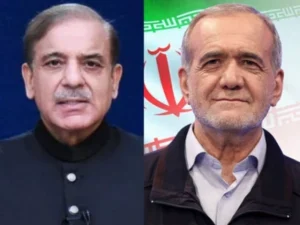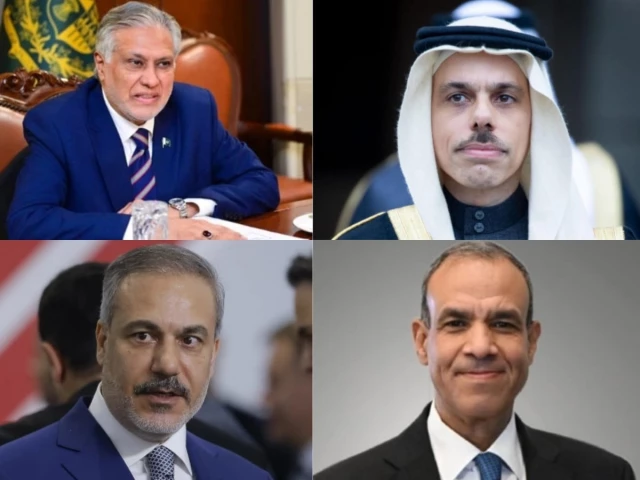
ISLAMABAD – Pakistan’s diplomatic push to broker an end to the US-Israeli war on Iran is entering a critical phase, with the foreign ministers of three major regional powers set to converge on Islamabad this weekend. Prince Faisal bin Farhan Al Saud of Saudi Arabia, Hakan Fidan of Turkiye, and Dr. Badr Abdelatty of Egypt will hold “in-depth discussions on a range of issues, including efforts to de-escalate tensions in the region,” the Foreign Ministry announced Saturday.
The visiting dignitaries will also call on Prime Minister Shehbaz Sharif, underscoring the high-level engagement Pakistan is marshaling as it seeks to position itself as the lead mediator in a conflict that has disrupted global energy markets and threatened to plunge the Middle East into a wider war.
“Pakistan highly values its relations with the brotherly countries of Saudi Arabia, Turkiye, and Egypt,” the Foreign Ministry statement said, adding that the visits “will provide an opportunity to further strengthen Pakistan’s cooperation and coordination with these countries across multifaceted areas of mutual interest.”
A Coordinated Mediation Effort
The simultaneous visits represent the culmination of weeks of intensive diplomatic engagement by Pakistan, which has been facilitating backchannel communications between Tehran and Washington since the conflict began on February 28. The four nations—Pakistan, Saudi Arabia, Turkiye, and Egypt—have all been involved in trying to mediate between the two adversaries, and each is acutely vulnerable to threats to energy supplies and trade routes arising from the conflict.
Turkish Foreign Minister Hakan Fidan, speaking to broadcaster A Haber late Friday, said the meeting would seek to establish a mechanism aimed at de-escalation. “We would discuss where the negotiations in this war are heading and how these four countries assess the situation and what can be done,” he said.
Fidan’s remarks suggest that the Islamabad gathering is intended to coordinate positions among the four mediating nations and develop a unified approach to pressing both Washington and Tehran toward a ceasefire.
Pakistan’s Emerging Role as Mediator
Pakistan’s mediation efforts have gained significant momentum in recent weeks. On Tuesday, Prime Minister Shehbaz Sharif publicly offered Pakistan as a venue for US-Iran peace talks—an offer that received an extraordinary boost when President Donald Trump reposted it on his Truth Social platform, a move widely seen in Islamabad as Washington’s tacit endorsement of Pakistan’s emerging role.
On Thursday, Deputy Prime Minister and Foreign Minister Ishaq Dar confirmed that indirect communication between the US and Iran was underway through messages being relayed by Pakistan, with Turkiye and Egypt also assisting diplomatic efforts. Dar has been engaged in a flurry of diplomatic activity, holding conversations with his Iranian, Turkish, Egyptian, and Chinese counterparts, as well as with British and UAE officials.
Pakistan has conveyed to Tehran a US proposal for ending the war, which reportedly outlines 15 points addressing Iran’s nuclear and ballistic missile programs, as well as maritime security in the Strait of Hormuz. While Iranian officials have indicated that any negotiations could take place in Pakistan or Turkey, Tehran has publicly denied talking with Washington and has described the US proposal as “one-sided and unfair.”
China’s Endorsement
In a significant development, Pakistan also received a strong endorsement of its mediation role from China. Foreign Minister Ishaq Dar held a telephonic conversation with Chinese Foreign Minister Wang Yi on Saturday, during which Wang expressed appreciation for Pakistan’s “unremitting efforts to de-escalate the Iranian situation” and supported Pakistan in continuing to play its role as a mediator.
Lin Jian, spokesperson for the Chinese Foreign Ministry, announced the conversation on X, noting that the two sides agreed to work together to promote a ceasefire, resume peace talks, ensure the safety of non-military targets and shipping routes, and support the United Nations.
China’s backing adds significant weight to Pakistan’s mediation efforts, particularly given Beijing’s close relationship with Tehran and its status as a permanent member of the UN Security Council.
The Stakes: A Region on Edge
The intensified diplomatic push comes as the five-week-old conflict continues to exact a devastating toll. According to figures cited by Anadolu, more than 1,340 people have been killed in Iran since US-Israeli strikes began, including former Supreme Leader Ayatollah Ali Khamenei. Iran has retaliated with waves of drone and missile strikes targeting Israel and Gulf countries hosting US military assets.
The closure of the Strait of Hormuz has driven global oil prices above $100 a barrel, with ripple effects felt as far away as Pakistan, where short-term inflation jumped 8.24% year-on-year for the week ended March 26. Iraq’s oil production has been slashed from 3.3 million barrels per day to just 900,000 barrels, and in Lebanon, Israeli strikes have displaced more than one million people, including an average of 19,000 children displaced daily.
The US has reported billions of dollars in military equipment losses, and the White House has warned that President Trump is prepared to “unleash hell” on Iran if Tehran fails to accept the “reality of the current moment.” Yet Trump has also indicated that talks with Iran are going “very well,” reflecting the dual-track approach of diplomacy backed by military pressure.
The 15-Point Proposal
At the center of the diplomatic efforts is a 15-point US proposal that has been conveyed to Tehran through Pakistani intermediaries. According to reports, the proposal addresses Iran’s nuclear and ballistic missile programs, as well as maritime security in the Strait of Hormuz.
Iran’s demands, however, extend far beyond what the US has reportedly offered. Tehran is seeking guarantees against future military action, compensation for wartime losses, and formal recognition of its control over the Strait of Hormuz—a position Iran’s military has reinforced by declaring that the strait “will not return to the past.”
One Iranian official has dismissed the US proposal as “one-sided and unfair,” suggesting that significant gaps remain between the two sides. Yet the fact that the proposal is being discussed and that Iranian officials have indicated openness to negotiations in Pakistan or Turkey suggests that both sides see value in continuing the diplomatic channel.
A Critical Weekend Ahead
As the foreign ministers of Saudi Arabia, Turkiye, and Egypt arrive in Islamabad, the focus will be on whether the four nations can present a unified front in pressing both Washington and Tehran toward a ceasefire. The coordination meeting comes at a critical moment, with the five-day pause on US strikes against Iranian power plants having expired and the conflict showing no signs of abating.
The visiting dignitaries will have the opportunity to assess the state of negotiations, share intelligence on the evolving situation, and develop a coordinated strategy for engaging with both sides. Turkey’s Fidan has indicated that the goal is to chart out “actionable steps” to end the war before there is further destruction to the region and global economy.
Analysis: A Moment of Opportunity
The convergence of Saudi, Turkish, and Egyptian foreign ministers in Islamabad represents a moment of significant diplomatic opportunity—and a test of whether Pakistan’s mediation efforts can translate into tangible results.
For Pakistan, the gathering is a validation of its emerging role as a regional mediator. Islamabad has leveraged its unique relationships—close ties with the Trump administration, deep connections with Iran, and trusted partnerships with Gulf states—to position itself as a credible broker. The presence of the Saudi, Turkish, and Egyptian foreign ministers in Islamabad signals that key regional powers see Pakistan as a central player in efforts to end the conflict.
For the mediating quartet, the challenge is to translate coordination into concrete leverage. The US has signaled openness to Pakistan’s mediation role, and Iran has indicated a willingness to negotiate in Pakistan or Turkey. But the gaps between the two sides remain wide, and the window for diplomacy may be closing as the conflict continues to escalate.
For the broader region, the stakes could not be higher. The conflict has already disrupted global energy markets, displaced millions, and threatened to draw in additional powers. A diplomatic breakthrough would not only end the immediate violence but could reshape the strategic landscape of the Gulf.
As the foreign ministers gather in Islamabad, the question is whether the momentum generated by Pakistan’s mediation efforts can be sustained and translated into a ceasefire. The coming days will test whether diplomacy can succeed where military force has failed—and whether Pakistan can deliver on the promise of its emerging role as a peacemaker.