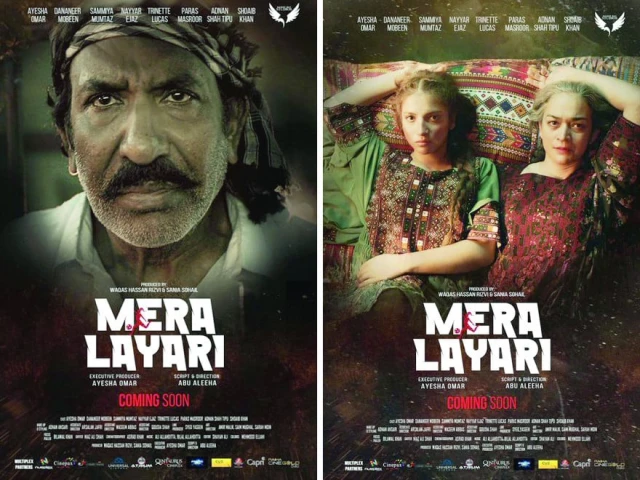
Actor and lead of “Mera Lyari,” Dananeer Mobeen, attended the UK Asian Film Festival this weekend at BFI Southbank to discuss the film’s purpose. She clarified that it is not a response to “Dhurandhar,” but is instead an inspiring portrayal of Lyari and its multicultural themes, focusing on women and sports.
Addressing comments that suggest “Mera Lyari” is a response to “Dhurandhar,” Dananeer said, “It’s a disservice to boil this movie down to a response to another film. The core and crux of this movie is so special.”
Exploring Lyari’s Culture
“There are so many themes that we have explored in this film. We have explored Lyari, football culture, female football culture, women in sports, South Asian women in sports,” she elaborated.
The actor also noted that the film’s layered storytelling should not be viewed from a single angle: “There are so many layers in this story so to see it from this angle, I think will be a disservice.”
A Bird’s-Eye View
Dananeer added, “We should see this film through a bird-eye view and keep all the themes in mind.”
She concluded by saying: “It’s a beautiful film. It was a beautiful image of Lyari, all the women we have shown and what we have seen over there. You will have to see it in the film.”
Release Date
Urging audiences to view the film holistically, Dananeer’s message notes that “Mera Lyari,” set to release on May 8, should not be reduced to comparisons, but appreciated as a layered story rooted in Lyari’s culture, female experiences, and sports.
Analysis: Beyond the Comparison
The comparison between “Mera Lyari” and “Dhurandhar” was perhaps inevitable. Both films deal with similar themes? But Dananeer’s point is well taken: reducing a film to a “response” to another film ignores its own artistic merit.
“Mera Lyari” focuses on Lyari — a neighbourhood in Karachi with a rich cultural heritage — and its female football culture. The film explores women in sports in Pakistan, a subject rarely depicted on screen.
By telling audiences to view the film from a “bird-eye view,” Dananeer is asking for a more sophisticated engagement. The film is not a polemic; it is a story.
The release on May 8 will give audiences the opportunity to see for themselves. Dananeer’s plea is simple: judge the film on its own terms.