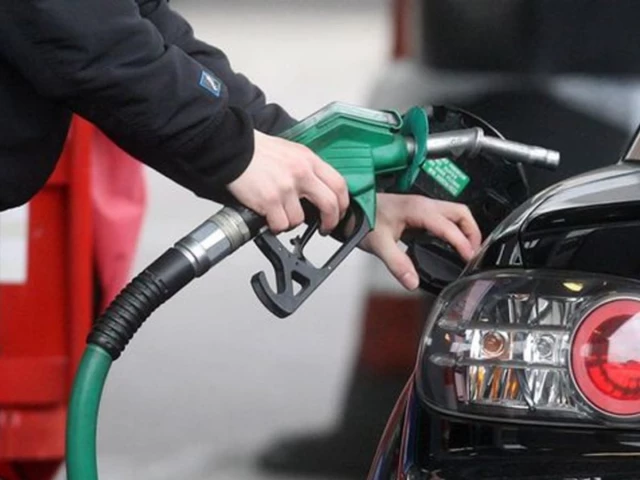
ISLAMABAD – The federal government on Friday hiked the price of petrol by Rs14.92 and that of high-speed diesel (HSD) by Rs15 for the next week amid the fuel crisis triggered by the blockade of the Strait of Hormuz. According to a press release from the Petroleum Division, the new petrol price is Rs414.78 and the new HSD price is Rs414.58 per litre. The new prices will remain applicable from Friday midnight.
This is the second consecutive increase since April 30, when the government raised petrol prices by Rs6.51 per litre and high-speed diesel prices by Rs19.39 per litre amid the ongoing fuel crisis caused by the blockade of the Strait of Hormuz.
Since rising tensions between the United States and Iran in the Middle East led to a surge in petroleum prices, the government has increased fuel prices by more than 50 per cent.
Background of the Crisis
The US and Israel launched an attack on Iran in February, after which Tehran retaliated with strikes and closed the Strait of Hormuz, disrupting global oil supplies and triggering a sharp rise in international oil prices. The strait, through which approximately 20 per cent of global oil passes, has been effectively closed since early March.
Amid the rising prices, the government, in the first week of March, increased petroleum product prices twice, noting that the hikes exceeded the increase in the international market. However, the most significant increase was witnessed in April this year.
Price Volatility
Earlier this month, the government raised the petrol price by Rs137 per litre, taking it to a record Rs458.4. However, a few days later, the Prime Minister, in a televised address, announced an Rs80 per litre reduction in the petroleum levy on petrol, bringing its price down to Rs378 per litre.
Last week, the government again increased the prices of both high-speed diesel and petrol by Rs26.77 per litre despite no corresponding increase in international rates, as it imposed nearly Rs27 per litre additional levy on fuel to push prices higher. Just a week later, it again raised petroleum product prices, bringing them close to Rs400 per litre.
Impact on Consumers
The consecutive price hikes are expected to further fuel inflation, which has already been rising due to the energy crisis. Transport fares are likely to increase, and the prices of essential commodities — which are largely transported by diesel-powered vehicles — are also expected to rise.
The government has previously provided targeted subsidies for two- and three-wheelers, as well as for public transport and agriculture. However, the scale of the price increases may outpace the relief provided by these subsidies.
Analysis: A Crisis Without End
The government’s decision to raise fuel prices for the second consecutive week reflects the persistent pressure on Pakistan’s energy sector. The Strait of Hormuz remains closed, and despite diplomatic efforts by Pakistan to mediate between the US and Iran, no permanent agreement has been reached.
The volatility of fuel prices — first a record increase, then a reduction, then another increase — creates uncertainty for businesses and households. Long-term planning becomes difficult when prices can swing by Rs80 per litre within days.
The government’s reliance on the petroleum levy as a revenue source is understandable given fiscal constraints. But the levy is regressive: it takes a larger percentage of income from the poor than from the rich.
As the ceasefire between the US and Iran remains fragile, and as diplomatic efforts continue, the people of Pakistan are bearing the cost. The fuel crisis is not of their making, but they are paying for it — at the pump, in the market, and in their daily lives.