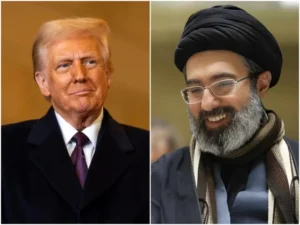


Tehran/Washington – The Middle East conflict entered a paradoxical phase on Monday, with Iran definitively ruling out any prospect of diplomacy while President Donald Trump declared the war was “pretty much” over. On the ground, the contradiction played out in fresh strikes on Gulf energy infrastructure and massive rallies in Tehran supporting the new Supreme Leader.
‘I Don’t See Any Room for Diplomacy’
Kamal Kharazi, an adviser to the office of the supreme leader, delivered a stark message from Tehran. In an interview with CNN, he stated, “I don’t see any room for diplomacy anymore,” adding that Iran could sustain the war for a “long time.”
The comments came as Iran’s Assembly of Experts formally selected Mojtaba Khamenei, son of the assassinated leader, as the new Supreme Leader, signaling a firm continuity of the hardline establishment despite the ongoing conflict.
Trump: ‘The War is Very Complete’
In stark contrast, President Trump offered an optimistic assessment from Washington. Speaking to CBS News by phone, he declared the US-Israeli campaign a success.
“I think the war is very complete, pretty much. They have no navy, no communications, they’ve got no air force,” Trump said, suggesting the conflict’s active phase was nearing its end.
Gulf Energy Sites Hit
Despite Trump’s declaration, the region remained under active fire. Bahrain was hit hard, with the sprawling Al Ma’ameer oil facility struck, causing a fire and significant damage. The country’s state-owned energy firm Bapco was forced to declare force majeure, becoming the latest Gulf producer to activate the legal clause after Qatar and Kuwait.
Bahrain also reported another drone attack on the island of Sitra, injuring 32 people, including four children in serious condition.
Other strikes across the Gulf included:
- Qatar: Intercepted 17 ballistic missiles and six drones; no casualties.
- Saudi Arabia: Destroyed two waves of drones heading for the Shaybah oil field.
- Kuwait: Reported a combined missile and drone attack, with air defenses working to intercept.
- UAE: Detected 15 ballistic missiles (12 destroyed, 3 fell into sea) and intercepted 17 of 18 drones. Two Emirati servicemen were killed in a separate helicopter crash due to a “technical malfunction.”
Regional and Human Toll
The conflict’s spread was further underscored by NATO confirming it had intercepted a second ballistic missile fired from Iran over Turkish airspace.
The human cost continues to mount. The Emirati deaths bring the total number of people killed in the Gulf since the war began to 23, including 10 civilians. A US soldier, Sgt. Benjamin Pennington, also died from injuries sustained last week in Saudi Arabia, bringing American combat deaths to seven.
Tehran Rallies
As the strikes continued, thousands of supporters gathered in Tehran’s Enghelab Square to pledge allegiance to the new leader. Security chief Ali Larijani claimed the appointment had left the US and Israel in “despair,” while the Revolutionary Guards pledged their full obedience.
Iran’s foreign ministry spokesperson Esmaeil Baghaei reiterated that ceasefire talks were “irrelevant” while military operations persisted, framing the conflict as a “war of necessity” imposed on Tehran.