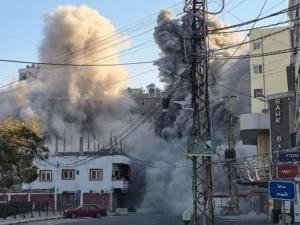


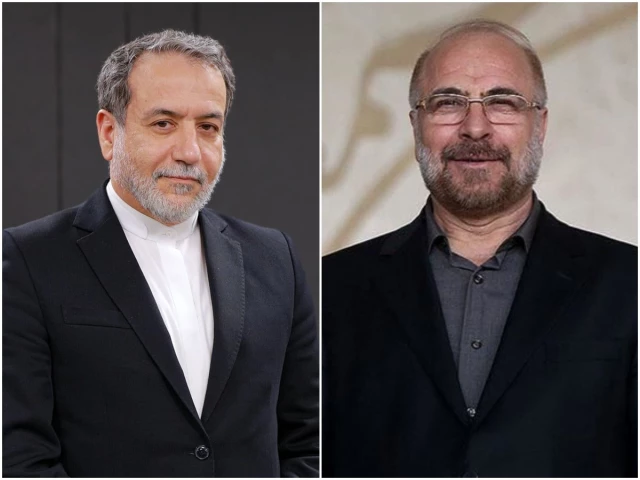
Tehran/Washington/Ankara – As the US-Israel war on Iran enters its 10th day, Tehran is projecting a dual message: a pledge not to harm ordinary Americans, coupled with a stern warning of “uncontrollable consequences” if the US targets civilians. The conflict continues to expand, drawing in NATO and causing devastating civilian casualties across the region.
Iran’s Warning to Washington
In a post on X, Iranian Foreign Minister Seyed Abbas Araghchi struck a conciliatory tone towards the American public. “Iran does not want to harm ordinary Americans who overwhelmingly voted to end involvement in costly foreign wars,” he wrote, blaming the surge in gas prices and costlier mortgages on “Israel and its dupes in Washington.”
However, a much more severe warning came from the Speaker of the Iranian Parliament, Dr. Mohammad Bagher Ghalibaf. Reacting to US President Donald Trump’s stated intention to target “groups of people,” Ghalibaf issued a stark threat.
“Killing people and attacking population centers will have uncontrollable consequences; we will respond recklessly and without mercy,” he declared.
In a separate interview, Foreign Policy Advisor Kamal Kharazi stated, “I don’t see any room for diplomacy anymore,” adding that Iran could continue the war for a “long time.”
NATO Intercepts Second Missile
The conflict’s geographic spread was underscored on Monday when NATO forces intercepted a second ballistic missile fired from Iran over Turkish airspace.
Turkey’s defence ministry confirmed the incident, stating the munition was “neutralised by NATO air and missile defence assets.” Fragments fell in an empty area in the Gaziantep region, causing no injuries. Presidential communications chief Burhanettin Duran warned all parties, “particularly Iran, to refrain from actions that could endanger regional security.”
The US responded by ordering non-essential staff to leave its consulate in Adana and urging all American citizens to depart “southeast Turkey” immediately.
Regional Fallout
- UAE: The Ministry of Defence announced the deaths of two armed forces personnel in a helicopter crash due to a “technical malfunction” while on duty.
- Lebanon: UNICEF reported that at least 83 children have been killed and 254 injured in Lebanon since March 2, as the conflict between Israel and Hezbollah intensifies. Nearly 700,000 people, including 200,000 children, have been displaced.
- Kuwait: Iran’s Revolutionary Guards claimed an offensive against the “Al-Udayri Helicopter Base” (Camp Buehring) , stating they destroyed fuel tanks and infrastructure. The US has not commented on the claim.
New Leadership, New Strikes
In Tehran, thousands of people gathered in Enghelab square to pledge allegiance to the new Supreme Leader, Ayatollah Mojtaba Khamenei, whose appointment has drawn congratulations from Azerbaijan’s President Ilham Aliyev and a message of “unwavering support” from Russian President Vladimir Putin.
The Israeli military announced it had begun a new “wide-scale wave of strikes” against infrastructure in Tehran, Isfahan, and southern Iran.
Global Economic and Diplomatic Impact
- EU Warning: EU economy commissioner Valdis Dombrovskis warned that a protracted war could unleash a “substantial inflationary shock on the global and European economy.”
- Trump’s Offer: President Trump urged Australia to grant asylum to Iran’s national women’s soccer team, offering to take them in if Australia refused.
- Diplomacy Dead: Iran’s Foreign Ministry spokesperson Esmaeil Baghaei stated that ceasefire talks are “irrelevant” as long as military confrontations continue, emphasizing that the war was “imposed on us.”