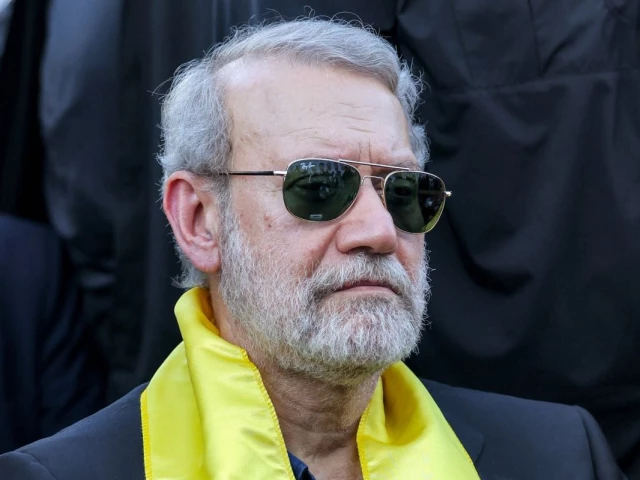
TEHRAN — Iranian state media confirmed late Tuesday the death of Ali Larijani, a senior Iranian official and longtime pillar of the country’s political and security establishment, following an Israeli strike that targeted him in Tehran.
The confirmation ended hours of uncertainty after Israeli Prime Minister Benjamin Netanyahu announced that Israel had “eliminated” Larijani, portraying him as a central figure in Iran’s power structure. Initial silence from Iranian authorities had left the claim unverified until state broadcast outlets formally acknowledged his death.
The Strike
The confirmation followed reports of overnight explosions across parts of Tehran, with witnesses describing blasts heard in multiple areas of the Iranian capital. Iranian authorities acknowledged Larijani’s death through official media channels but did not immediately disclose operational details surrounding the incident.
Shortly after Israel announced the strike, Larijani’s official X (formerly Twitter) account posted a handwritten note by him paying tribute to Iranian sailors killed in a US submarine attack earlier this month—an apparent acknowledgment of developments surrounding his death.
A Key Establishment Figure
Larijani, 68, was considered a key pillar of Iran’s political and strategic establishment, maintaining close ties with the late Supreme Leader Ayatollah Ali Khamenei. Rather than holding a single fixed executive office in recent years, he functioned as a senior strategist within the country’s political and security framework.
A former Speaker of Parliament (2008-2020) and ex-head of the Supreme National Security Council, Larijani played a central role in shaping Iran’s nuclear policy and regional diplomacy. Closely aligned with Khamenei, he was widely regarded as a key power broker and adviser within the system, often acting as a bridge between political, military, and diplomatic institutions—particularly during periods of heightened conflict.
His role reportedly grew more influential in recent weeks following intensifying conflict and leadership shifts within the country, including the reported killing of Khamenei in late February during joint US-Israeli strikes. That event significantly escalated tensions across the region and disrupted global markets.
Regional Reactions
In response to Larijani’s death, Iranian authorities have called for nationwide rallies, urging citizens to demonstrate unity. Meanwhile, Turkish Foreign Minister Hakan Fidan criticized the targeting of political leaders, calling such actions violations of international norms.
Escalating Conflict
Larijani’s death marks another escalation in the ongoing conflict between Iran and the US-Israel alliance, which has entered its third week with significant military operations ongoing and civilian casualties reported on multiple sides.
The strike in Tehran follows a pattern of targeted killings of senior Iranian figures, raising fears of further retaliation and a broader Middle Eastern conflagration. With both Washington and Tehran staking out opposing positions, and Israel continuing its military campaign, the situation remains highly volatile.
International observers have expressed concern over mounting regional escalation, though diplomatic efforts to de-escalate have so far shown limited progress.