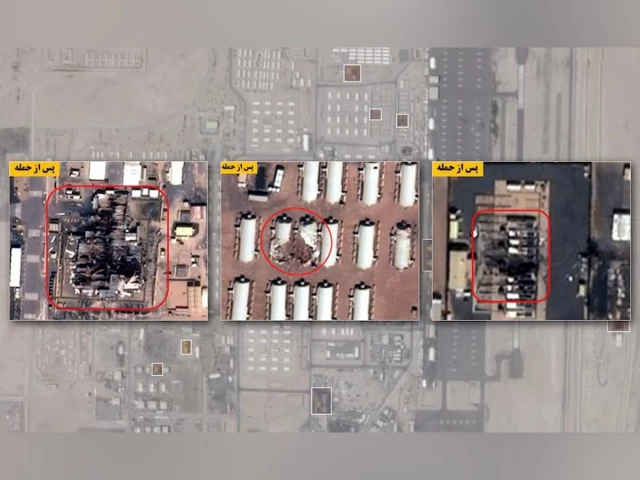
WASHINGTON – Iranian airstrikes caused far more destruction to American military sites across the Middle East than US officials had publicly acknowledged, according to a Washington Post analysis of satellite imagery released Wednesday. The review documented 228 damaged structures and equipment at 15 US bases, including 217 buildings and 11 military assets.
The extent of the destruction was far greater than what the US had publicly disclosed, said the Washington Post. The White House did not immediately react to the Post’s findings.
Hardest-Hit Locations
More than half of the damage occurred at the 5th Fleet headquarters in Bahrain and three bases in Kuwait. A US official told the newspaper that those locations were hit hard, probably because they permitted attacks from their territory.
Major Equipment Losses
The strikes destroyed Patriot missile defence systems in Bahrain and Kuwait, a satellite dish at Naval Support Activity Bahrain, and THAAD radar systems in Jordan and the United Arab Emirates.
An E-3 Sentry command and control aircraft was destroyed at Prince Sultan Air Base in Saudi Arabia after being repeatedly parked on an unprotected taxiway, the Washington Post reported. A refuelling tanker was also lost.
5th Fleet Relocates
Damage at the Naval Support Activity is “extensive,” said one US official, forcing the 5th Fleet headquarters to relocate to the MacDill Air Force Base in Florida. Two other officials said forces may never return to regional bases in large numbers.
Context of the Conflict
The strikes occurred during the US-Israeli war on Iran, which began on February 28 and lasted approximately 40 days before a ceasefire was brokered by Pakistan on April 8. Iran launched waves of drone and missile strikes targeting US military assets across the Gulf in retaliation for US-Israeli strikes on Iranian nuclear and military infrastructure.
Analysis: A Hidden Toll
The Washington Post’s analysis reveals that the toll of Iranian strikes on US military assets was significantly higher than officially acknowledged. The destruction of Patriot missile defence systems, THAAD radars, and an E-3 Sentry aircraft represents a substantial degradation of US air defence and command capabilities in the region.
The relocation of the 5th Fleet headquarters from Bahrain to Florida is a significant development. The 5th Fleet has been headquartered in Bahrain for decades; its relocation suggests that the damage was severe enough to make continued operations from the site untenable.
The statement that forces “may never return to regional bases in large numbers” reflects a strategic reassessment. The US has maintained a significant military presence in the Gulf for decades. Iranian strikes have demonstrated the vulnerability of these bases, potentially leading to a reduced footprint.
The discrepancy between the officially acknowledged damage and the satellite imagery analysis raises questions about transparency. The US has been selective in its disclosures; the Washington Post’s analysis suggests that the full extent of the damage has been underreported.
As the ceasefire continues, the damage to US military infrastructure will have long-term implications. The cost of repairs, the relocation of forces, and the strategic reassessment will shape the future of the US military presence in the Gulf.