The UN relief chief warned on Thursday of a possible “occupation” in southern Lebanon as he said 200,000 refugees and displaced people have fled from Lebanon to Syria in recent weeks amid Israeli attacks. Tom Fletcher told the UN Security Council that the vast majority of those crossing the border are Syrians returning home, while about 25,000 others are mainly Lebanese and Palestinians.
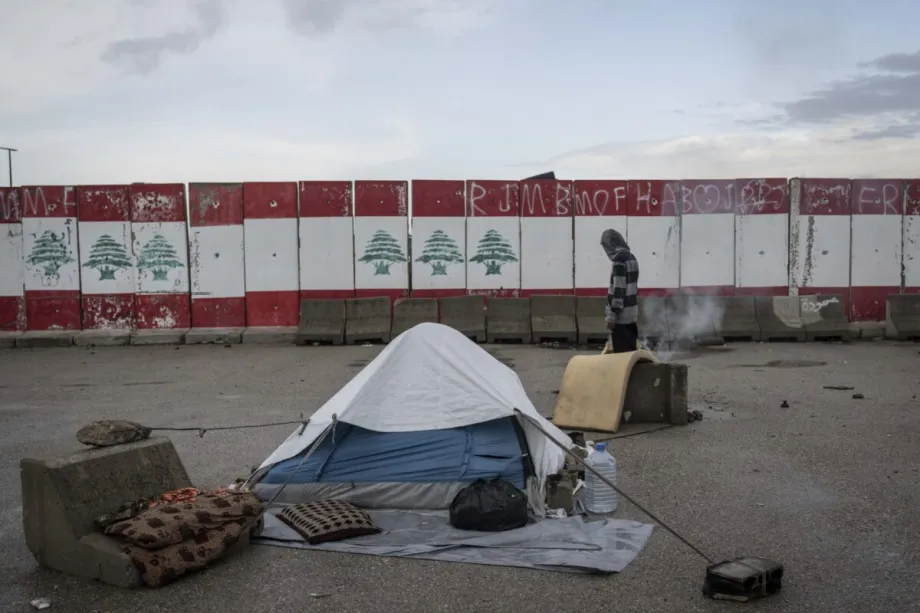
NEW YORK/UNITED NATIONS – “About 200,000 refugees or displaced people have crossed the border in the last three or four weeks,” Tom Fletcher, UN Under-Secretary-General for Humanitarian Affairs, told the Security Council. He described a worsening humanitarian crisis, saying “one in five people in Lebanon is displaced right now” amid Israel’s devastating military action and Hezbollah’s rocket fire.
Fletcher said he saw “enormous destruction” and “active, coercive displacement” during his assessment of the situation. He issued a stark warning: “We may be facing the prospect, and from the sound of the statements being made by some Israeli ministers, it’s a real danger of a fresh occupation, of a fresh occupied territory in southern Lebanon.”
A Long-Running Conflict
Fletcher also voiced concern about the trajectory of the conflict, saying there is “a sense … this is likely to be a long-running conflict.” He warned that even if the wider war between the US, Israel, and Iran subsides, fighting between Israel and Hezbollah “may not” end.
“That will have significant humanitarian implications for Lebanon, but also for the wider region,” he said.
The escalation began after Hezbollah launched cross-border attacks on Israel following the start of the US-Israel war on Iran on February 28, prompting Israel to carry out airstrikes and ground operations across Lebanon.
Humanitarian Toll
Lebanese authorities have reported that nearly 1,318 people have been killed and 3,935 others wounded in the Israeli assault since the escalation began. The UN has previously reported that more than 1 million people have been displaced within Lebanon, with one in five people in the country currently displaced.
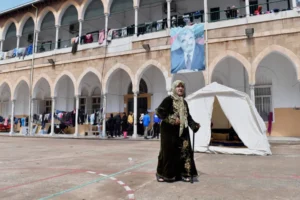
The displacement has placed enormous strain on Lebanon’s already fragile infrastructure. More than 130,000 people are sheltering in over 600 collective centers, often in overcrowded and unsafe conditions. Water systems have been damaged, and more than 435 schools have been repurposed as shelters, disrupting education for more than 115,000 students.
Exodus to Syria
The movement of 200,000 people from Lebanon to Syria represents a significant population shift. According to Fletcher, 175,000 of those crossing are Syrians returning home—many of whom had previously sought refuge in Lebanon from Syria’s own civil war. The remaining 25,000 are mainly Lebanese and Palestinians fleeing the violence.
The return of Syrians to their homeland comes despite the ongoing instability in Syria, suggesting that the conditions in Lebanon have become so dire that returning to a war-torn Syria is seen as the safer option.
Risk of Occupation
Fletcher’s warning about the risk of “a fresh occupation” in southern Lebanon reflects growing international concern over statements by Israeli officials. Israeli Prime Minister Benjamin Netanyahu has ordered the expansion of a security buffer zone in southern Lebanon, and far-right ministers have called for the Litani River to become “the new border.”
Israel previously occupied southern Lebanon from 1982 to 2000, an occupation that gave rise to Hezbollah. Many analysts fear that a renewed occupation would have similar consequences, creating the conditions for a new generation of resistance.
A Region on the Brink
The UN relief chief’s warning about the risk of occupation in southern Lebanon should be a wake-up call to the international community. A renewed Israeli occupation would not only deepen the humanitarian catastrophe—it would also ensure that the conflict continues for years, if not decades, to come.
The exodus of 200,000 people from Lebanon to Syria is itself a damning indictment of the situation. That Syrians are choosing to return to a country still recovering from over a decade of civil war rather than remain in Lebanon speaks to the severity of the crisis. For Palestinians and Lebanese fleeing to Syria, the decision is even more desperate, as they face an uncertain future in a country already struggling to meet the needs of its own population.
As the conflict shows no signs of abating, the international community faces a choice: act to prevent a humanitarian catastrophe and a potential occupation, or watch as Lebanon—already teetering on the edge—descends further into chaos. The UN Security Council has heard the warning. What remains to be seen is whether it will act.