TOKYO — A Japanese court ruled Tuesday that a law imposing severe restrictions on women’s access to sterilization “lacks rationality,” a decision plaintiffs hailed as a significant step forward in the fight for reproductive autonomy.
The Tokyo District Court, however, stopped short of declaring the decades-old “maternity protection” law—one of the world’s most restrictive barriers to sterilization—unconstitutional or illegal. It also dismissed the five plaintiffs’ claim that the law denies them their constitutional rights to bodily autonomy.
The Law and Its Restrictions
Under current Japanese law, a woman must have multiple children despite health risks or face life-threatening danger from pregnancy to qualify for sterilization. Even when these conditions are met, spousal consent is required.
The law effectively bans physicians from performing sterilization procedures on healthy, childless women—regardless of their personal convictions about motherhood or childbearing.
The Plaintiffs’ Challenge
The landmark lawsuit brought together five women united by innate discomfort with their reproductive abilities and aversion to what they describe as a patriarchal society that pushes women toward motherhood.
Among them is Kazane Kajiya, a 29-year-old plaintiff who never wanted children. At age 27, married and healthy, she flew to the United States to have her fallopian tubes removed—a journey she undertook because Japanese law prevented her from making that choice at home.
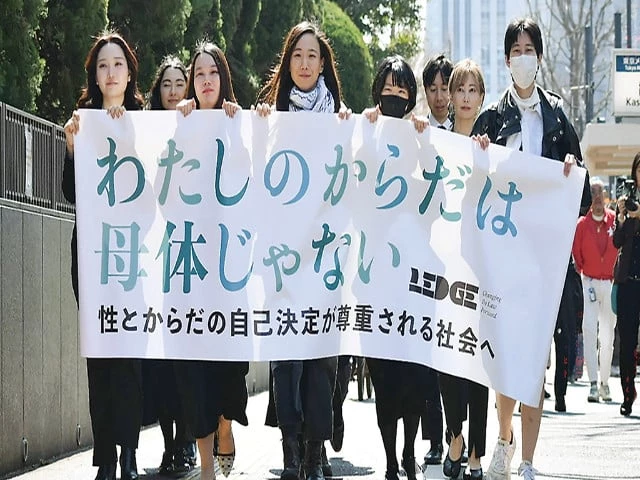
“This is a historic verdict,” Kajiya told reporters outside the court, where she and other plaintiffs unfurled a banner welcoming the ruling as a “step forward.”
Kajiya considers her form of happiness “different from what is supposed to be the right answer in Japan”—a rapidly aging society determined to boost falling birth rates.
But with Tuesday’s ruling, she said, “I can say I’ve done nothing wrong. I can hold my head high, and walk proudly.”
The Court’s Reasoning
In what lawyers described as a legal first, presiding judge Masahiro Kamano said women are “guaranteed contraceptive freedom” under the Constitution, and that they can “decide to avoid pregnancy, without interference from the state.”
While the court did not find the law unconstitutional, its declaration that the law “lacks rationality” carries significant moral and political weight, potentially opening the door for future legislative reform.
Broader Context
The case highlights the tension between Japan’s traditional social structures—which strongly emphasize women’s roles as mothers—and evolving conceptions of individual autonomy and reproductive choice.
With birth rates falling and the population aging, Japanese policymakers have long prioritized pro-natalist policies over reproductive freedom. For women like Kajiya, that approach leaves little room for those who simply do not wish to become mothers.
What’s Next?
The ruling, while not striking down the law, creates pressure on lawmakers to reconsider the statute’s provisions. Plaintiffs and their supporters hope the verdict will spark a broader conversation about reproductive rights in Japan and eventually lead to legislative change.
For now, Kajiya and her fellow plaintiffs are celebrating what they see as validation of their choices and their fight.