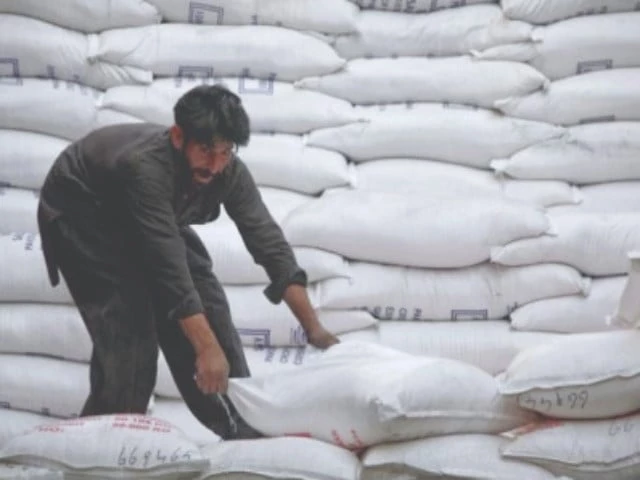
LAHORE – The Pakistan Sugar Mills Association (PSMA) has appealed to the government to immediately export the surplus sugar produced during the current crushing season 2025-26 in order to boost the country’s foreign exchange reserves. With global sugar prices rising amid Middle East tensions, millers argue that timely exports could earn between $400 million and $500 million while helping the industry clear outstanding payments to sugarcane growers.
A spokesperson for the association stated that as of November 15, 2025, the carry-forward stock from the previous season stood at 271,704 metric tons, comprising 117,541 metric tons of local sugar and 154,163 metric tons of imported sugar.
Record Production Figures
According to data from the Federal Board of Revenue (FBR) dated March 31, 2026, a total of 7.573 million metric tons of sugar has been produced in the ongoing crushing season that began in November 2025. This figure is expected to reach 7.6 million tons once the remaining mills complete their processing. In addition, an average of 86,809 metric tons of sugar from sugar beet, based on the previous two years, will also be produced between April and June 2026. Combining all these quantities, total sugar production will reach 7.958 million tons.
According to the FBR’s data, the country’s annual sugar supply between November 16, 2024 and November 15, 2025 was 6.476 million tons, translating into average monthly consumption of 539,662 tons. Taking into account a population growth rate of 2.5%, the annual sugar consumption is projected to reach 6.638 million tons next year.
“This indicates a surplus stock of 1.320 million metric tons. Even after maintaining an additional one-month strategic reserve, there will still be a surplus of 767,000 tons,” the spokesperson said.
Industry Challenges
Currently, according to millers, the sugar industry is facing significant challenges in maintaining these excessive stocks amid low demand. Sugar prices are much lower than production costs, primarily due to the continuous increase in sugarcane prices and other production inputs, resulting in losses to the industry.
The Pakistan Sugar Mills Association has also called for deregulation of the sector and revival of ethanol blending policies. Industry leaders argue that without any additional investment, Pakistan has the capacity to produce 12 million tonnes of sugar annually, enabling exports of up to 6 million tonnes and generating around $4 billion in foreign exchange, while ethanol exports could add another $1 billion.
Global Price Opportunity
International sugar prices have climbed to around $429 per tonne amid escalating tensions involving Israel, the United States, and Iran. Industry estimates suggest that if prices rise further by $100-200 per tonne, Pakistan could earn between $800 million and $900 million through exports.
Owing to the Iran-US conflict, global oil prices are soaring and Pakistan is spending a substantial amount of foreign exchange on oil imports to meet domestic needs. In this situation, the spokesperson stressed, the government should export 767,000 tons of surplus sugar to earn between $400 million and $500 million.
Government Response
Chairing a meeting of the Sugar Advisory Board, Federal Minister for National Food Security Rana Tanveer Hussain agreed to form a committee comprising public and private stakeholders to finalise recommendations on exporting more than one million tonnes of sugar. The committee will include representatives from the ministries of production, finance, and national food security, Federal Board of Revenue (FBR), as well as PSMA and cane commissioners from Punjab, Sindh, Khyber-Pakhtunkhwa and Balochistan.
PSMA Chairman Chaudhry Mohammad Zaka Ashraf warned that timely approval of exports would enable the sugar industry to clear billions of rupees in outstanding payments to sugarcane growers. He cautioned that any delay could create difficulties in clearing farmers’ dues.
Analysis: Balancing Export Earnings and Domestic Supply
The push for sugar exports comes at a time when Pakistan is seeking to boost foreign exchange reserves amid the economic fallout of the Middle East conflict. With the Strait of Hormuz disrupted and global oil prices elevated, every dollar of export earnings counts.
However, the government faces a delicate balancing act. Critics have warned that a repeat of last year’s “export trauma”—when large-scale exports led to domestic shortages and soaring retail prices—could harm consumers and force costly sugar imports. Market analysts have noted that as of mid-March, physical stocks stood below the level needed to cover domestic consumption, strategic reserves, and supply chain requirements until the next harvest in November, suggesting a projected deficit of over 300,000 tons.
The Sugar Advisory Board committee is expected to propose exporting surplus sugar to Gulf and Middle Eastern markets, as well as to countries including Bangladesh and China that have already expressed interest. The committee will submit its report to Prime Minister Shehbaz Sharif and the federal cabinet for final approval.
For the sugar industry, which is facing losses due to high production costs and excess inventory, export approval cannot come soon enough. For consumers, the government must ensure that domestic supplies remain adequate and prices stable. The committee’s recommendations will determine whether Pakistan can turn its sugar surplus into a foreign exchange opportunity without repeating the mistakes of the past.