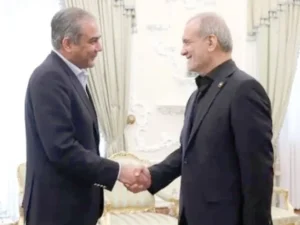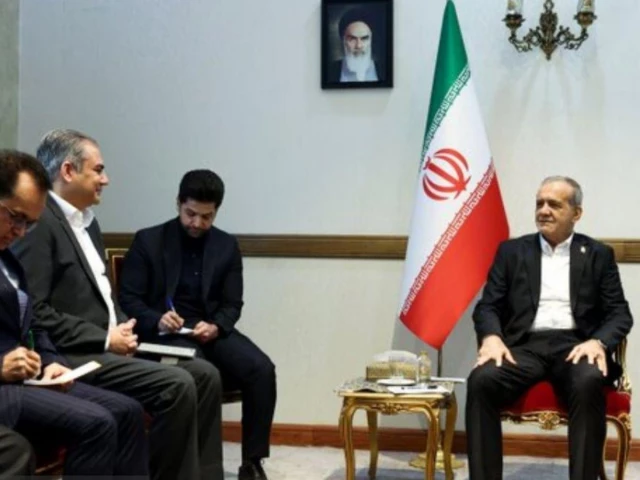
In a significant diplomatic development amid rising regional tensions, Pakistan’s Interior Minister Mohsin Naqvi held extensive high-level talks with Iranian President Masoud Pezeshkian in Tehran, focusing on regional stability, ceasefire efforts, and the evolving geopolitical landscape of the Middle East.
The nearly 90-minute private meeting at Iran’s Presidential Administration underscored growing coordination between Islamabad and Tehran at a time when the region faces increasing uncertainty linked to security concerns, shifting alliances, and diplomatic deadlocks involving global powers.
According to Iranian state-affiliated WANA news agency, Naqvi’s visit to the presidential complex lasted approximately three hours, highlighting the importance both countries attached to the discussions.
Pakistan’s Diplomatic Role Praised by Iran
During the talks, President Pezeshkian praised Pakistan’s recent diplomatic engagement in regional peace efforts, particularly Islamabad’s role in supporting ceasefire stabilisation following recent hostilities in the region.
Iranian officials specifically acknowledged the diplomatic involvement of Pakistani Prime Minister Shehbaz Sharif and Pakistan’s military leadership under Asim Munir.
According to statements released after the meeting, Tehran credited Pakistan for maintaining what it described as a “responsible and balanced approach” during a highly sensitive period for the region.
President Pezeshkian emphasized that cooperation among Muslim nations was essential to preserving stability and reducing opportunities for foreign intervention in regional affairs. He also warned against what he described as destabilising actions by external powers seeking to influence Middle Eastern geopolitics.
Focus on Regional Security and Border Stability
Security cooperation remained a major component of the discussions. Iranian leadership appreciated the coordination between Pakistan, Afghanistan, and Iraq in preventing their territories from being used for armed operations targeting Iran.
The issue of border management and militant activity has remained a sensitive matter for both Pakistan and Iran in recent years, particularly in border regions vulnerable to cross-border insurgent movements and smuggling networks.
Officials familiar with regional security affairs say the latest talks indicate a broader push toward intelligence sharing, coordinated border security mechanisms, and joint efforts to reduce instability along frontier areas.
Naqvi reaffirmed Pakistan’s commitment to diplomatic engagement and peaceful conflict resolution, stating that Islamabad continues to support de-escalation initiatives across the region.
Iran Signals Interest in Expanding Bilateral Cooperation
Beyond security matters, both sides explored opportunities for deeper economic and scientific collaboration. President Pezeshkian expressed interest in expanding bilateral trade, academic partnerships, and technological cooperation between the neighboring countries.
Iranian officials reportedly described current regional developments as an opportunity to strengthen long-term strategic relations with Pakistan.
Naqvi highlighted the historic cultural and religious ties connecting the two nations, saying that strong political commitment from both governments could open a new chapter in bilateral relations.
Analysts note that Pakistan and Iran have often maintained cautious but cooperative ties despite broader geopolitical pressures and international sanctions affecting Tehran.
Senior Iranian Leadership Participates in Discussions
The meeting was also attended by Iranian Interior Minister Eskandar Momeni and Foreign Minister Abbas Araghchi, indicating the strategic significance of the discussions.
Iranian officials praised Pakistan’s constructive diplomatic posture and acknowledged Islamabad’s growing role in facilitating communication channels during regional crises.
Diplomatic observers believe the inclusion of top Iranian security and foreign policy officials signals Tehran’s intention to strengthen coordination with Pakistan not only on bilateral matters but also on broader regional security frameworks.
Pakistan Positioning Itself as Regional Mediator
Naqvi’s visit comes at a crucial time as Pakistan increases diplomatic efforts aimed at reducing tensions between Iran and the United States following months of failed negotiations and military escalations in the region.
Islamabad has recently intensified backchannel diplomacy, attempting to encourage renewed dialogue between Tehran and Washington while simultaneously maintaining relations with Gulf states and Western partners.
Experts say Pakistan’s balanced foreign policy approach may allow it to emerge as a credible intermediary in future negotiations involving regional powers.
The talks in Tehran also reflect Pakistan’s broader strategy of enhancing regional connectivity and avoiding deeper polarization amid rapidly changing Middle Eastern alliances.
Growing Regional Uncertainty Shapes Diplomacy
The Tehran meeting took place against the backdrop of continuing instability across the Middle East, where ongoing security crises, proxy conflicts, and diplomatic rivalries continue to influence regional politics.
Iranian officials strongly condemned recent military actions targeting the country, describing them as illegal attempts to undermine national stability. President Pezeshkian stated that Iran had successfully resisted external pressure through national unity and resilience.
Political analysts believe Iran is currently seeking stronger ties with neighboring countries to reduce diplomatic isolation and reinforce regional partnerships amid increasing geopolitical pressure.
For Pakistan, maintaining stable relations with Iran is considered strategically important due to shared borders, energy interests, regional security concerns, and growing economic connectivity initiatives.
Analysis: Pakistan-Iran Engagement Reflects Shifting Regional Dynamics
The high-level meeting between Mohsin Naqvi and President Pezeshkian signals a broader diplomatic recalibration taking place across South Asia and the Middle East.
As regional conflicts intensify and global powers compete for influence, countries like Pakistan are attempting to position themselves as stabilizing actors capable of facilitating dialogue rather than confrontation.
The discussions in Tehran suggest that Islamabad is seeking a more proactive regional role—one that balances security cooperation, economic diplomacy, and mediation efforts simultaneously.
For Iran, strengthening ties with Pakistan could help expand regional alliances at a time when geopolitical uncertainty remains high. For Pakistan, deeper engagement with Tehran may improve border stability and enhance its influence in future regional negotiations.
The outcome of these diplomatic efforts may shape regional security calculations in the months ahead as governments across the Middle East navigate an increasingly fragile geopolitical environment.