ISLAMABAD – As Pakistan grapples with the economic fallout of the Middle East conflict and surging global oil prices, the government has unveiled a comprehensive digital solution to deliver fuel subsidies to the country’s most vulnerable consumers. The mobile application-based system, finalized during a meeting at the Oil and Gas Regulatory Authority (OGRA), will use QR code technology and digital vouchers to ensure that subsidized petrol reaches eligible low-income households.
The initiative comes as the government has already provided Rs69 billion in petrol and diesel subsidies over the past two weeks and now seeks to shift toward more targeted, direct support. The system is being fast-tracked to maintain uniform implementation and prevent discrepancies across retail outlets as the country faces critical pressures on fuel supply chains.
How the System Will Work
Under the proposed mechanism, subsidized petrol distribution will be handled through a digital platform that allows eligible users to obtain fuel through verified quotas. The Ministry of IT will procure 24,000 mobile phones for the project, with the National IT Board determining pricing for the devices. Oil marketing companies (OMCs) will purchase the phones and distribute them to petrol stations nationwide.
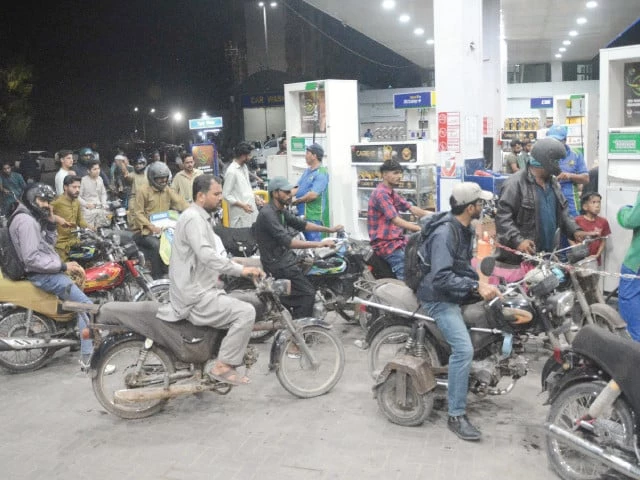
Each retail outlet will operate at least two dedicated mobile phones to run the subsidy system. The devices will be deployed across approximately 12,000 petrol pumps, with two designated nozzles at each outlet reserved for subsidized fuel.
The system is primarily aimed at supporting two- and three-wheelers—motorcycles and rickshaws—which form the backbone of transportation for millions of low-income Pakistanis. Consumers will receive digital vouchers through the mobile application, which has been developed and is in the final stages of testing. A QR code mechanism will be used to verify transactions, with a formal announcement expected soon.
Quota System and Verification
Vehicle-based quotas will be linked to users through vehicle registration numbers and CNIC verification, ensuring that subsidies reach intended beneficiaries. Consumers will generate digital vouchers via the app, which retailers will scan or enter into their system. The platform will automatically validate available quotas—for example, if a user requests 20 litres but only has 15 litres remaining, the system will allow dispensing only the eligible amount.
Users will not be allowed to exceed a fixed monthly quota. Motorcycles are expected to receive between 20 and 30 litres of subsidized petrol per month. A final decision on extending the scheme to vehicles up to 800cc is still pending, with authorities weighing the fiscal implications of including four-wheelers in the subsidy program.
Officials said the mechanism is modelled on the previously implemented Ramazan Package system, which successfully delivered subsidized goods to low-income households during the holy month.
Hardware Distribution and Costs
Initial procurement costs for the specialized mobile devices are estimated at Rs36,000 per unit, with retail pricing around Rs72,000. Petrol pumps will deposit funds into a designated government account, the details of which will be communicated by OGRA, to ensure immediate delivery of devices.
The Ministry of IT is coordinating with manufacturers to supply the specialized devices and will provide demonstrations and video tutorials to assist operators in using the system. Retailers have been instructed to immediately share details of a focal person for each outlet—including name, CNIC, and contact number—to facilitate coordination despite OGRA already maintaining outlet records.
Monitoring and Oversight
Officials said monitoring of petrol pumps across the country has already begun to ensure transparency and operational efficiency. The government said it would ensure timely fuel pricing adjustments to protect retailers from licensing complications and sudden price increases, aiming to avoid disruptions similar to the 2020 fuel crisis.
An emergency dispensation mechanism has also been built into the framework to allow approvals through a designated process if required, as the government continues to face critical pressures on fuel supply chains. OMCs have been directed to submit details of a focal person for each retail outlet to ensure seamless coordination.
Broader Energy Challenges
The digital subsidy system comes amid a broader national and regional energy crisis. The closure of the Strait of Hormuz—through which approximately 20 percent of the world’s oil normally passes—has driven global oil prices above $100 a barrel, forcing Pakistan to implement drastic conservation measures.
The federal government is finalizing a proposal for a nationwide one-day weekly lockdown to conserve fuel, while Sindh has already implemented austerity measures including a 60 percent reduction in official vehicle fuel consumption and is considering smart lockdowns. Educational institutions in Sindh have been closed through March 31, and government offices are observing work-from-home on Fridays.
During the OGRA meeting, participants were informed that the ministries of finance and foreign affairs are also engaged in parallel diplomatic efforts involving Iran and Saudi Arabia to manage broader energy supply challenges. The digital system is being fast-tracked to ensure uniform implementation and prevent discrepancies across retail outlets.
Regional Context
The energy crisis gripping Pakistan is inextricably linked to the broader Middle East conflict that began with US-Israeli strikes on Iran on February 28. Iran has retaliated with waves of drone and missile strikes targeting Israel and Gulf countries hosting US military assets, and has asserted control over the Strait of Hormuz, declaring that the situation “will not return to the past.”
Iraq’s oil production has been slashed from 3.3 million barrels per day to just 900,000 barrels, and the US has reported billions of dollars in military equipment losses in the conflict. In Lebanon, Israeli strikes have displaced more than one million people, including an average of 19,000 children displaced daily over the past three weeks.
Pakistan has positioned itself as a key mediator in the conflict, with Prime Minister Shehbaz Sharif formally offering to host US-Iran talks in Islamabad—an offer that President Donald Trump reposted on his Truth Social platform, signaling Washington’s openness to the initiative. France and the G7 have expressed support for Pakistan’s mediation role.
Analysis: A Targeted Response to a National Crisis
The government’s mobile app-based fuel subsidy system represents a significant evolution in Pakistan’s approach to managing the energy crisis, shifting from broad subsidies to targeted support for the most vulnerable consumers.
The decision to focus on two- and three-wheelers reflects a recognition that these vehicles are the primary mode of transportation for low-income Pakistanis. Motorcycles and rickshaws are not just personal vehicles but essential tools for livelihoods—for delivery workers, small business owners, and daily commuters who cannot absorb the full impact of surging fuel prices.
The digital infrastructure being deployed—24,000 mobile phones, QR code verification, and a voucher system—represents a substantial investment in administrative capacity. If successfully implemented, the system could serve as a template for other targeted subsidy programs, allowing the government to deliver support more efficiently than through across-the-board price controls.
Yet the challenges are significant. The system’s success depends on seamless coordination between the Ministry of IT, OGRA, oil marketing companies, and thousands of individual petrol pump operators. Any glitches in the digital platform or delays in hardware distribution could undermine public confidence in the program.
The broader context remains troubling. The digital subsidy system is a response to a crisis that Pakistan did not create but cannot escape. The closure of the Strait of Hormuz and the regional conflict show no signs of resolution, and the government’s ability to sustain even targeted subsidies will be tested if fuel prices continue to rise.
For the millions of Pakistanis who depend on two- and three-wheelers for their daily lives, the new system offers a measure of relief—if it works. As the government races to implement the program before the next price adjustment, the stakes could not be higher.