LAHORE – When Prime Minister Shehbaz Sharif posted a carefully worded appeal on X in the early hours of Wednesday, requesting President Trump to extend his deadline by two weeks and simultaneously urging Iran to open the Strait of Hormuz as a gesture of goodwill, few expected that within hours the world would be exhaling its first collective breath of relief in over five weeks. But that is precisely what happened.
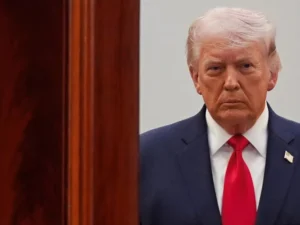
Trump agreed to suspend aggressive attacks on Iran for two weeks, following direct conversations with PM Sharif and Pakistan’s Army Chief Asim Munir. Iran’s Foreign Minister Abbas Araghchi thanked Pakistan for its role in negotiations and confirmed that safe passage through the Strait of Hormuz would be permitted for the two-week period.
Market Reaction
The result of all that effort is now visible in the numbers that matter most to ordinary people everywhere. Global markets reacted with one of the most dramatic single-day moves in recent memory, with West Texas Intermediate (WTI) crude tumbling 18% and Brent crude sliding over 15% to around $94 per barrel — a stunning reversal after oil had touched $117 earlier in the day.
European markets surged, with the pan-European Stoxx 600 advancing nearly 4%, while Germany’s DAX led regional gains with a 4.8% jump. In Asia, South Korea’s Kospi soared 6.8%, Japan’s Nikkei 225 gained 5.29%, Australia’s S&P/ASX 200 jumped 2.55%, and China’s Shanghai Composite rose 2.6%. And of course, Pakistan’s bourse jumped more than 9%. These are not routine market movements; they represent trillions of dollars in restored confidence.
The Harder Question
Now comes the harder question: what should Pakistan do with this moment? Diplomatic capital, like any other kind, depreciates quickly if it is not invested wisely. The country sits at a rare inflection point, and the window to convert goodwill into concrete national gain will not stay open for long.
Energy Opportunity
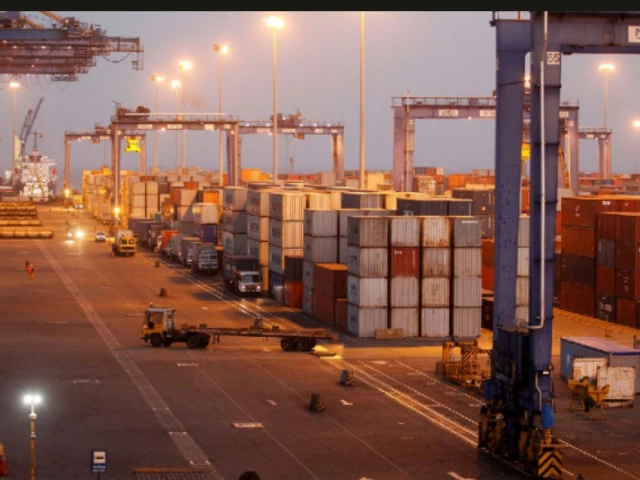
The most immediate opportunity lies in energy. Pakistan’s clearest incentive for getting involved was that it relied on the Strait of Hormuz for most of its oil and gas imports, and the blockade had already triggered a domestic energy crisis, though not worse than neighbouring countries like India.
With peace talks now scheduled to continue in Islamabad and Pakistan holding considerable trust in the United States and Tehran’s eyes, geopolitical experts believe that Islamabad is in a position to revive the long-stalled Iran-Pakistan gas pipeline — a project that could save Pakistan an estimated $1-1.5 billion annually in LNG import costs — and negotiate preferential access to Iranian oil at deeply discounted rates.
Trade Expansion
Formalising the existing $1-2 billion in informal bilateral trade through reopened banking channels will multiply cross-border commerce in textiles, food, pharmaceuticals, and cement. Iran, facing reconstruction costs and a devastated economy, will need reliable buyers and friendly neighbours. Pakistan can be both, but only if it moves quickly and decisively at the negotiating table.
Connectivity Vision
Beyond oil, there is the longer vision of connectivity. The idea of a rail and road transit corridor linking Pakistan with Iran and onwards to Turkey and European markets has circulated in foreign policy circles for years. A post-war reconstruction environment, with international money flowing into Iran, creates a rare opening to push this agenda into practical reality.
Leveraging US Goodwill
Crucially, the US goodwill earned through this mediation can be spent elsewhere: easing IMF loan terms, unlocking World Bank financing, and reopening military and technology cooperation suspended in recent years. Combined with CPEC’s existing infrastructure, Pakistan could reframe Gwadar and Chabahar as complementary rather than competing ports, positioning itself as the critical land bridge of the emerging multipolar world.
The Uncomfortable Truth
But here is the uncomfortable truth that no amount of diplomatic success can paper over: a country cannot fully leverage global standing if its own house is in disorder. Pakistan’s economy remains weighed down by a bloated debt burden, a chronically weak rupee, an under-taxed elite, and an export sector that punches well below its potential.
Foreign investors and international partners do not commit serious capital to countries where the rule of law is inconsistent and economic policy lurches between IMF programmes. The credibility Pakistan has earned in foreign capitals must be matched by speeding up structural reforms at home: broadening the tax base, cutting unproductive expenditure, and making the business environment genuinely competitive.
Analysis: A Rare Window of Opportunity
Pakistan’s successful mediation between the United States and Iran represents a significant diplomatic achievement. But diplomacy is not an end in itself — it is a means to an end. The real measure of success will be whether Pakistan can translate this moment into tangible economic gains.
The energy opportunity is the most immediate. The Iran-Pakistan gas pipeline has been stalled for years due to international sanctions and bilateral tensions. With Pakistan now trusted by both Washington and Tehran, the conditions for reviving the project are more favourable than ever.
The trade opportunity is also significant. Formalising informal trade with Iran could multiply cross-border commerce, benefiting businesses on both sides. For Pakistan, this could mean increased exports of textiles, food, and pharmaceuticals to a market of over 80 million people.
The connectivity vision — linking Pakistan with Iran, Turkey, and Europe — would transform the country’s geography from a liability to an asset. Instead of being a transit route for others, Pakistan could become a hub of regional trade.
But none of this is possible without domestic reform. Pakistan’s economic fundamentals remain weak. The debt burden is high, the rupee is volatile, the tax base is narrow, and exports are stagnant. Foreign investors will not commit capital unless they see a consistent policy environment and a commitment to structural reform.
The window of opportunity will not stay open for long. Diplomatic capital depreciates quickly. Pakistan must act now — on energy, trade, connectivity, and domestic reform — to turn diplomatic success into economic success.