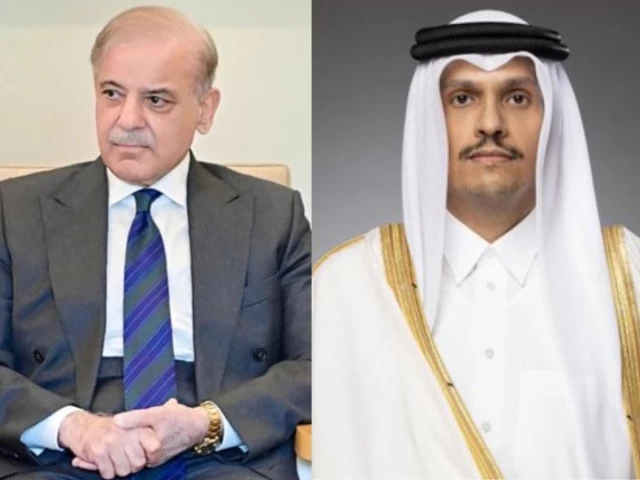
Prime Minister Shehbaz Sharif has thanked the leadership of Qatar for supporting Pakistan’s ongoing diplomatic efforts aimed at reducing tensions and promoting peace across the Middle East amid growing fears of renewed regional conflict.
The remarks came during a high-level telephone conversation on Sunday between PM Shehbaz and Qatar’s Prime Minister and Foreign Minister Mohammed bin Abdulrahman Al Thani, according to a statement issued by Pakistan’s Prime Minister’s Office.
The call reflects intensifying diplomatic coordination among regional powers as efforts continue to prevent further escalation between Iran, the United States, and other stakeholders in the region.
Pakistan and Qatar Discuss Regional Stability
According to the official statement, the two leaders exchanged views on the “evolving regional and international situation” and reviewed ongoing diplomatic initiatives focused on de-escalation.
PM Shehbaz reportedly thanked Qatar’s leadership for its “strong endorsement and support” of Pakistan-led peace initiatives aimed at promoting stability and reducing tensions in the Middle East.
The Pakistani premier also praised Qatar’s role in regional diplomacy, particularly its efforts to build international consensus around mediation initiatives and peaceful dialogue.
Political observers note that Qatar has increasingly emerged as one of the Gulf region’s most active diplomatic mediators, maintaining communication channels with multiple global and regional powers simultaneously.
Continued Coordination Emphasized
Both sides agreed on the importance of maintaining close coordination and dialogue among all relevant stakeholders to address common regional challenges.
The Prime Minister’s Office said the two leaders stressed the need for continued engagement and diplomatic communication to support peace efforts.
The conversation also highlighted the growing diplomatic partnership between Islamabad and Doha at a time when regional uncertainty continues to affect political and economic stability across the Middle East.
Diplomatic analysts believe Pakistan and Qatar are attempting to position themselves as constructive intermediaries capable of facilitating dialogue during periods of heightened geopolitical tension.
Pakistan Intensifies Peace Diplomacy
The call comes as Pakistan continues a broader diplomatic campaign involving Tehran, Washington, and Gulf capitals aimed at preventing renewed hostilities in the region.
Over recent weeks, Islamabad has increased high-level diplomatic contacts amid concerns that stalled negotiations between the United States and Iran could collapse entirely.
Pakistan’s leadership has repeatedly emphasized the importance of diplomacy, dialogue, and regional cooperation to avoid another major conflict.
Officials in Islamabad have also highlighted Pakistan’s growing role as a trusted intermediary capable of engaging rival powers simultaneously.
Qatar’s Growing Role in Middle East Mediation
Qatar has long played a key role in facilitating regional negotiations, including mediation efforts involving Afghanistan, Gaza ceasefires, hostage negotiations, and broader Gulf diplomacy.
Experts say Doha’s balanced relations with the United States, Iran, and various regional actors have made it an increasingly influential diplomatic player in Middle Eastern affairs.
PM Shehbaz reportedly expressed appreciation for Qatar’s “constructive role” in supporting ongoing peace efforts and diplomatic engagement across the region.
The two leaders also agreed to maintain regular high-level contact moving forward.
Amir of Qatar Expected to Visit Pakistan
During the conversation, PM Shehbaz conveyed warm wishes to Tamim bin Hamad Al Thani and expressed hope for the Qatari ruler’s official visit to Pakistan in the near future.
Analysts believe a future state visit could strengthen bilateral ties in areas including investment, energy cooperation, labor relations, and regional diplomacy.
Pakistan and Qatar have maintained close economic and political relations for years, particularly through energy partnerships and the presence of a large Pakistani expatriate community working in the Gulf state.
Second High-Level Contact in One Week
Sunday’s discussion marked the second telephone conversation between the two leaders within a week.
Earlier this month, PM Shehbaz and Sheikh Mohammed bin Abdulrahman Al Thani also discussed regional peace efforts and emphasized the importance of constructive engagement among all parties.
The repeated communication reflects growing urgency among regional actors seeking to avoid further escalation in an already fragile geopolitical environment.
Regional Tensions Continue to Shape Diplomacy
The Middle East remains under pressure from overlapping crises involving nuclear negotiations, regional proxy conflicts, economic sanctions, and security concerns around key trade and energy routes.
Recent diplomatic efforts by Pakistan, Qatar, and other regional states appear focused on preserving communication channels before tensions spiral further.
Security experts warn that any major breakdown in negotiations could significantly affect global energy markets, trade routes, and regional stability.
Analysis: Pakistan and Qatar Expanding Diplomatic Influence
The latest conversation between Pakistan and Qatar highlights how middle powers in the Muslim world are increasingly attempting to shape regional diplomacy through mediation and dialogue rather than confrontation.
For Pakistan, growing involvement in peace efforts involving Iran, Gulf states, and Western powers reflects Islamabad’s attempt to improve its global diplomatic standing and reposition itself as a stabilizing actor.
For Qatar, continued engagement reinforces its reputation as one of the region’s most active diplomatic facilitators capable of maintaining communication across competing geopolitical camps.
Analysts believe cooperation between Islamabad and Doha could become increasingly important if tensions between Iran and the United States continue to intensify.
At a time of growing uncertainty in the Middle East, sustained diplomatic coordination among regional actors may prove essential to preventing another large-scale crisis.