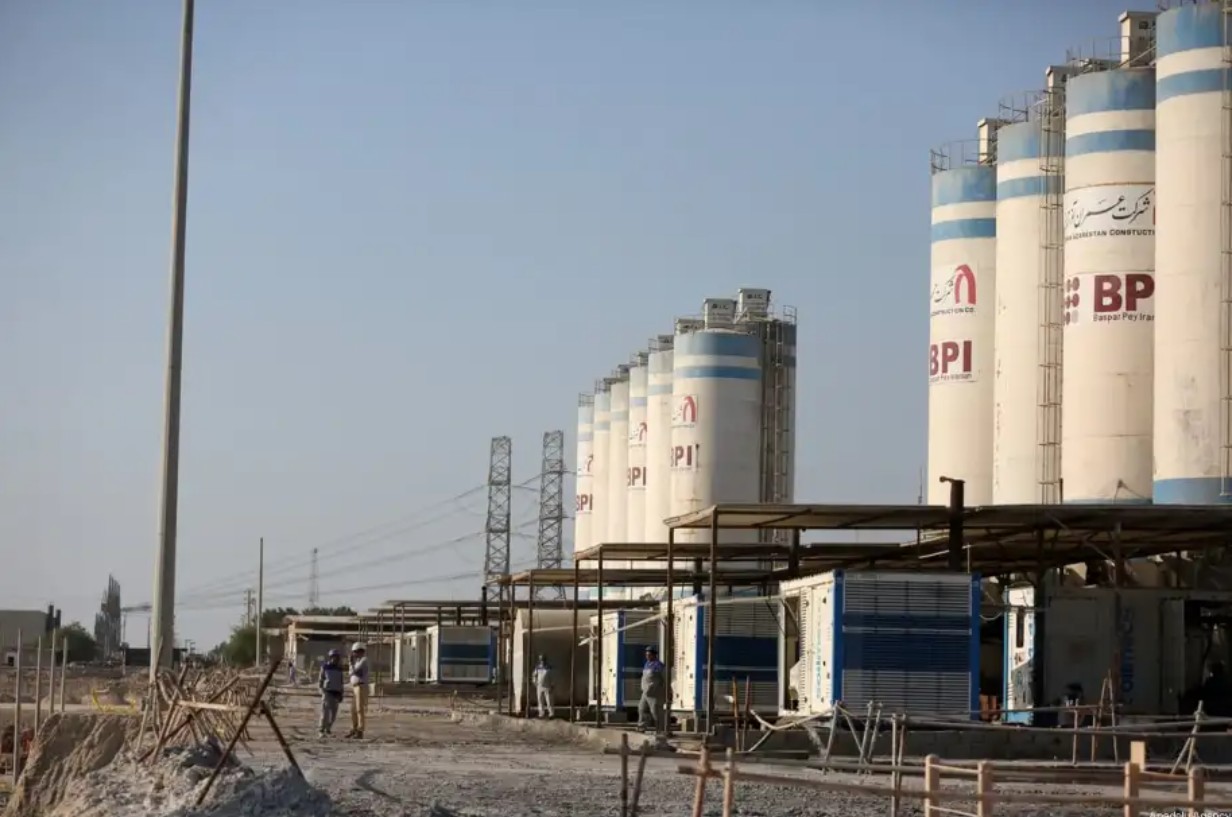
Russia has begun a large-scale evacuation of employees from Iran’s Bushehr nuclear power plant following US-Israeli attacks that killed one of the plant’s security personnel, Russian media reported on Saturday. A total of 198 employees are expected to return to Russia within two to three days, marking the largest evacuation since the conflict began on February 28.
MOSCOW – Citing Alexey Likhachev, the head of Russian state nuclear corporation Rosatom, state news agency TASS said the evacuation began shortly after an attack near the plant. The employees are being transported by bus toward the Iranian-Armenian border and will depart from Yerevan airport to return home .
“This is the largest evacuation,” Likhachev told reporters, noting that the evacuees are already on buses heading toward the border . Russia helped build the Bushehr plant and, as of last year, had approximately 700 personnel working there.
Fourth Attack on Nuclear Facility
The attack on Saturday marked the fourth time the Bushehr nuclear power plant or its surrounding area has been struck since the US-Israeli war on Iran began . The Atomic Energy Organization of Iran reported that a projectile hit near the plant’s territory, killing one security guard and damaging a building on the site .
Likhachev underlined that developments around the plant are unfolding according to an “undesirable scenario.” “As they say, our bad premonitions were not wrong. Overall, the escalation of the conflict around the Persian Gulf is leading to corresponding consequences near the plant,” he said .
Radioactive Contamination Fears
Iran’s Foreign Minister Abbas Araghchi issued a stark warning following the attack, stating on social media platform X that “radioactive fallout will end life in GCC capitals, not Tehran” . In a letter to UN Secretary-General Antonio Guterres and IAEA Director-General Rafael Grossi, Araghchi warned that continued strikes on Iran’s nuclear infrastructure pose serious environmental and human risks .
“These illegal attacks expose the entire region to a serious risk of radioactive contamination, which could have grave consequences for human health and the environment,” he said in the letter .
The Bushehr nuclear power plant, located approximately 17 kilometers southeast of the city of Bushehr, is Iran’s only operating nuclear power plant. It began supplying electricity in September 2011 under a cooperation agreement with Russia . In November 2014, Iran and Russia signed an agreement to add two more reactors to the plant .
IAEA Calls for Restraint
International Atomic Energy Agency (IAEA) Director-General Rafael Grossi expressed deep concern about the strike, stressing that nuclear power plant sites or nearby areas “must never be attacked” . He warned that auxiliary site buildings may contain vital safety equipment .
The IAEA confirmed that there was no increase in radiation levels reported following the strike, and the main sections of the plant remain intact . However, Grossi urged maximum military restraint to avoid the risk of a nuclear accident .
Regional Context
The attack on the Bushehr plant comes amid heightened regional tensions since the US and Israel launched a joint offensive on Iran on February 28. The conflict has killed more than 1,340 people to date, including former Supreme Leader Ayatollah Ali Khamenei . Iran has retaliated with drone and missile strikes targeting Israel, as well as Jordan, Iraq, and Gulf countries hosting US military assets.
Likhachev noted that the Iranian side is doing a great deal to ensure the safety of the Rosatom staff evacuation route, and cooperation with the Armenian government is proceeding smoothly . The evacuation marks the main phase of what Rosatom has been planning as the security situation around the plant continues to deteriorate.
Analysis: A Dangerous Precedent
The repeated attacks on Iran’s Bushehr nuclear power plant represent a dangerous escalation in the conflict, with potentially catastrophic consequences for the entire region. Nuclear facilities are protected under international humanitarian law, and strikes near operational reactors risk triggering a nuclear accident that could spread radioactive contamination across the Gulf.
The IAEA’s confirmation that this was the fourth such attack in recent weeks demonstrates a pattern of strikes near nuclear infrastructure. While the plant’s main facilities remain intact, the proximity of these attacks to an operating nuclear reactor is deeply concerning.
For Russia, the evacuation of its personnel reflects a judgment that the security situation around the plant has become untenable. Rosatom’s decision to remove nearly 200 employees in a single operation suggests that Russian nuclear authorities believe the risk of further attacks—and potential nuclear accident—is unacceptable.
For the Gulf states, Araghchi’s warning about radioactive fallout is not merely rhetoric. A major nuclear incident at Bushehr would contaminate water supplies and affect millions of people across the region, with Gulf countries relying heavily on seawater desalination for drinking water.
As the conflict continues, the international community faces the urgent task of ensuring that nuclear facilities are protected from further attacks. The IAEA has made its position clear: nuclear power plant sites must never be attacked. Whether that principle will be respected in the coming days and weeks remains uncertain.