As Pakistan grapples with the dual crises of surging global oil prices and its ranking as the world’s most polluted country, the Sindh government is preparing to implement smart lockdowns as part of an aggressive fuel conservation strategy. Provincial authorities have already reduced petrol consumption for official vehicles by 60 percent, with further restrictions under consideration as the Middle East war threatens to prolong energy supply disruptions.
KARACHI/SUKKUR – The specter of pandemic-era restrictions is returning to Pakistan’s cities, but this time the enemy is not a virus—it is the economic fallout of a war thousands of miles away. Sindh Local Government Minister Nasir Hussain Shah announced Tuesday that the provincial government is actively considering imposing smart lockdowns as a fuel conservation measure, warning that the current crisis demands extraordinary action.
“The present circumstances are not normal. If the war drags on, everyone will face difficulties,” Shah told reporters in Sukkur, underscoring the severity of the energy challenges confronting the province. His remarks come as global oil prices remain elevated above $100 a barrel following the closure of the Strait of Hormuz, the vital waterway through which approximately one-fifth of the world’s oil normally transits.
The minister noted that the government has already reduced petrol consumption for official vehicles by 60 percent as part of its initial response. Daily review meetings are being held to monitor the evolving situation, reflecting what he described as a proactive approach by the provincial administration to a crisis that shows no signs of abating.
Smart Lockdowns: A Familiar Tool for Unfamiliar Circumstances
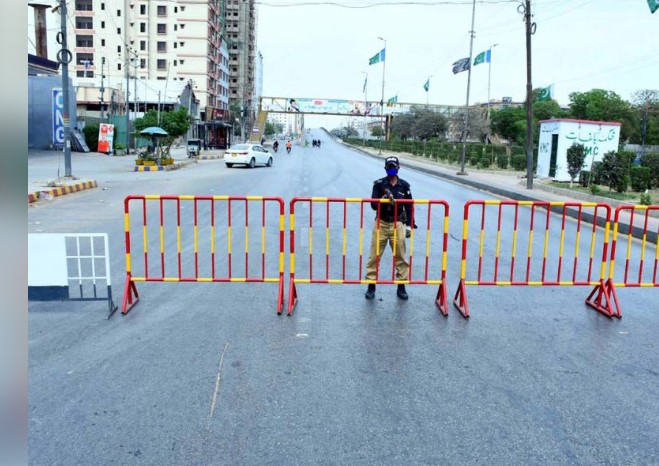
The smart lockdown model being considered by Sindh authorities was first deployed during the COVID-19 pandemic, offering a more targeted alternative to province-wide shutdowns. Under this system, restrictions are imposed on specific neighbourhoods based on local conditions, allowing essential activities to continue while curbing non-essential movement and fuel consumption.
Under the proposed framework, areas placed under such restrictions would see strict limits on gatherings—no more than four individuals at a time—while only one member per household would be permitted to leave home with a valid reason. Public events, social gatherings, and celebrations would be banned, and affected localities could be sealed to control movement.
For a province that includes Karachi—Pakistan’s largest city and commercial hub—the implementation of smart lockdowns would represent a significant intervention in daily life. The measures are designed to reduce fuel demand without completely paralyzing economic activity, a balancing act that authorities acknowledge will require careful calibration.
Austerity Measures Already in Effect
The smart lockdown consideration follows a broader package of austerity measures announced earlier this month by the Sindh government. These steps, aimed at reducing fuel consumption and limiting public expenditure, reflect the depth of the provincial administration’s concern about the economic trajectory.
Under the measures already in effect:
- Educational institutions will remain closed from March 16 to March 31, though examinations will continue as scheduled
- Government offices will observe work-from-home on Fridays, reducing commuting-related fuel consumption
- Fuel consumption of official vehicles has been cut by 50 percent for two months
- Sixty percent of government vehicles will remain off the roads during this period
- Provincial ministers will forgo salaries and allowances for April, May, and June
- Official travel will be restricted to economy class
- Purchase of new vehicles and furniture by government departments has been banned
- The chief minister’s official aircraft will remain grounded
- Government ceremonies in hotels have been prohibited, with events restricted to official buildings
- Official iftar dinners and other government-hosted gatherings have been banned
Collectively, these measures represent one of the most aggressive provincial responses to the energy crisis anywhere in Pakistan. Officials say the package is designed to ease pressure on fuel reserves while maintaining essential services as the global energy situation remains uncertain.
The Federal Context: Weekly Lockdown Under Consideration
Sindh’s consideration of smart lockdowns comes as the federal government prepares to finalize a proposal for a nationwide one-day weekly lockdown. A high-level meeting scheduled for Wednesday is expected to make a final determination on the federal plan, which would involve a complete shutdown of activities for at least one day each week.
The federal and provincial approaches represent complementary strategies. While the federal government contemplates broad, periodic restrictions, Sindh’s smart lockdown model offers the flexibility to target specific areas where fuel conservation measures are most urgently needed. The provincial government’s early adoption of austerity measures may also serve as a template for other provinces facing similar pressures.
The Fuel Crisis: Causes and Consequences
The fuel conservation measures at both federal and provincial levels are a direct response to the closure of the Strait of Hormuz, which has disrupted global oil supplies and driven prices to levels not seen in years. The waterway, through which approximately 20 percent of the world’s crude oil and liquefied natural gas normally passes, has been brought to a near-standstill since the start of the US-Israeli military campaign against Iran.
For Pakistan, a country that imports the vast majority of its oil needs, the impact has been immediate and severe. The government has been forced to pass on some of the increase in global prices to consumers, adding to inflationary pressures that were already straining household budgets. The fuel conservation measures are designed to reduce demand and ease pressure on foreign exchange reserves, which have been depleted by the higher cost of imports.
The Environmental Dimension
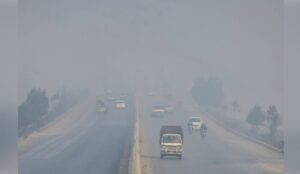
The fuel conservation measures take on added significance in light of the IQAir report released Tuesday, which ranked Pakistan as the world’s most polluted country in 2025. The report found that PM2.5 concentrations in Pakistan were up to 13 times higher than World Health Organization safety limits, with major urban centers including Karachi, Hyderabad, and Lahore recording persistently hazardous air quality.
For environmental advocates, the fuel conservation measures present both an opportunity and a concern. Reduced vehicular traffic and industrial activity during lockdown periods would likely result in temporary improvements in air quality—a phenomenon observed during COVID-19 restrictions. However, any such improvements would be short-term unless accompanied by longer-term investments in cleaner transportation and energy systems.
The Sindh government’s decision to keep educational institutions closed through the end of March, while primarily driven by fuel conservation concerns, also has potential health benefits. Reduced commuting traffic during school closures could contribute to lower pollution levels in urban areas, particularly during morning and afternoon peak hours.
Analysis: A Province Prepares for the Worst
Sindh’s aggressive response to the fuel crisis reflects a provincial administration preparing for a prolonged period of energy disruption rather than a short-term shock.
The decision to implement smart lockdowns—a tool associated with pandemic management—signals that authorities view the current situation as comparable in severity to the COVID-19 crisis. The 60 percent reduction in official vehicle fuel consumption, the grounding of the chief minister’s aircraft, and the suspension of ministerial salaries all suggest a recognition that extraordinary measures are required.
The timing is significant. With the federal government’s five-day pause on US strikes against Iranian power plants set to expire, and backchannel mediation efforts continuing through Pakistani intermediaries, there remains a possibility that diplomatic breakthroughs could ease the energy crisis. Yet Sindh’s preparations suggest that provincial authorities are not counting on a rapid resolution.
For Karachi, Hyderabad, and other urban centers in Sindh, the coming weeks will test the balance between fuel conservation and economic continuity. The smart lockdown model offers a more nuanced approach than blanket restrictions, but its effectiveness will depend on implementation and public compliance. The provincial government’s early adoption of austerity measures may help build credibility for more extensive restrictions if they become necessary.
As the fuel crisis deepens and the Middle East conflict shows no signs of rapid resolution, Sindh’s experience will likely serve as a bellwether for how other provinces respond. The decisions made in the coming days—about the scope of lockdowns, the duration of restrictions, and the balance between conservation and economic activity—will shape Pakistan’s ability to weather an energy crisis whose end is not yet in sight.