As Sindh grapples with a deepening fuel crisis and the complexities of implementing smart lockdowns, the provincial government is now preparing for an additional challenge: widespread rains and thunderstorms forecast from Wednesday. Chief Secretary Asif Haider Shah has placed authorities on high alert, directing district administrations to ensure pre-emptive arrangements as the Pakistan Meteorological Department predicts a week-long spell of heavy precipitation across the province.
KARACHI – The Sindh government is facing a convergence of crises. Just days after announcing aggressive fuel conservation measures and considering smart lockdowns in response to the Middle East energy crisis, provincial authorities are now mobilizing to address the threat of urban flooding and infrastructure damage from an incoming weather system.
Chief Secretary Asif Haider Shah chaired a high-level meeting Tuesday attended by all commissioners, deputy commissioners, and assistant commissioners to review contingency plans and preparedness measures. The directive was unequivocal: all field officers must remain present in their districts, continuously monitor the situation, and ensure that public issues are resolved immediately.
“All commissioners, deputy commissioners and assistant commissioners must remain present in the field and continuously monitor the situation so that public issues can be resolved immediately,” the chief secretary’s office said in a statement, emphasizing that public facilitation and field presence should remain the top priority.
The Pakistan Meteorological Department has forecast widespread rain and thunderstorms nationwide from March 24 to 30. In Sindh, rain-wind and thunderstorm activity—with chances of isolated hailstorms—is expected in Thatta, Badin, Hyderabad, Sukkur, Dadu, Kashmore, Jacobabad, Larkana, and Karachi on Wednesday and Thursday, and again on Saturday and Sunday, with brief intervals between systems.
Urban Flooding Fears Prompt Emergency Measures
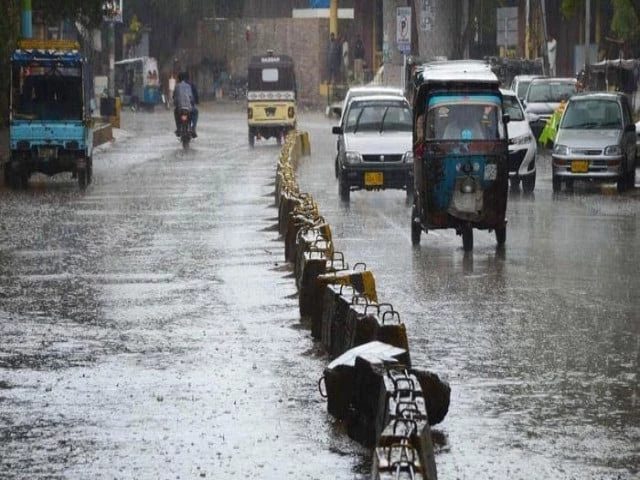
The chief secretary’s directive placed special emphasis on drainage management, with authorities instructed to ensure the availability and operational readiness of all machinery to prevent urban flooding and water accumulation. For Karachi—a sprawling metropolis of over 20 million people where inadequate drainage infrastructure has historically led to devastating floods during heavy rains—the warning carries particular urgency.
District administrations and municipal bodies have been directed to remain fully mobilized and ensure uninterrupted public service delivery. Relevant agencies were also instructed to take emergency measures to maintain traffic flow and minimize disruption for citizens, with particular attention to hazardous billboards and unsafe structures that could pose risks during strong winds.
The Provincial Disaster Management Authority (PDMA) has been directed to issue an advisory immediately and maintain effective coordination with all relevant departments. PDMA Director General Salman Shah said several districts, including Karachi, Thatta, Badin, Hyderabad, Sukkur, Dadu, Kashmore, Jacobabad, and Larkana, could be affected by the weather system.
A Province on Edge: Fuel Crisis, Pollution, and Now Rain
The rain forecast comes at a particularly delicate moment for Sindh. The provincial government has already implemented sweeping austerity measures in response to surging fuel prices driven by the Middle East conflict, including:
- A 60 percent reduction in petrol consumption for official vehicles
- Educational institution closures from March 16 to March 31 (examinations excepted)
- Work-from-home Fridays for government offices
- Provincial ministers forgoing salaries for three months
- The grounding of the chief minister’s official aircraft
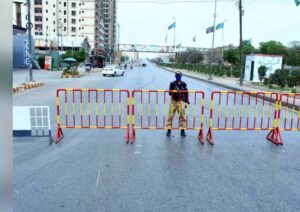
Additionally, the government is actively considering implementing smart lockdowns as a fuel conservation measure—a decision that would need to be balanced against the operational demands of responding to weather-related emergencies.
The timing also coincides with the release of the IQAir report ranking Pakistan as the world’s most polluted country in 2025. While rain typically brings temporary relief from air pollution by washing particulate matter from the atmosphere, the combination of flooding and fuel shortages could complicate disaster response efforts.
Public Health and Infrastructure Concerns
The PDMA alert warned that strong winds and possible hailstorms could damage weak structures and solar panels—a significant concern in a province where solar energy adoption has increased as households seek alternatives to grid electricity. Standing crops in various areas may also be affected, threatening agricultural livelihoods just as farmers prepare for the next planting season.
A drop in temperature is expected during the period, which may provide some relief from the oppressive heat that typically precedes the summer season. However, cooler temperatures also increase energy demand for heating in some areas, adding to the pressure on fuel supplies.
The authority has directed its staff to remain on alert with necessary machinery in place to respond promptly to any emergency situation. PDMA further noted that, on the instructions of Sindh Chief Minister’s Adviser on Rehabilitation Giyan Chand Essrani, advance arrangements have been ensured to deal with any emergency situation.
The Karachi Factor
For Karachi, Pakistan’s largest city and economic engine, the rain forecast presents particular challenges. The city’s drainage infrastructure has been overwhelmed repeatedly by heavy rains in recent years, leading to widespread flooding, traffic paralysis, and loss of life. The Sindh government has undertaken significant infrastructure improvements in the aftermath of previous flooding events, but the scale of the challenge remains substantial.
The timing of the rains—midweek and continuing through the weekend—means that the work-from-home arrangements already in place for Fridays may help reduce traffic congestion during the worst of the weather. However, the closure of educational institutions through March 31, while originally implemented for fuel conservation, may also reduce the number of vehicles on the road during school hours, potentially easing emergency response logistics.
Analysis: A Test of Governance Amid Multiple Crises
Sindh’s simultaneous preparation for heavy rains, implementation of fuel conservation measures, and consideration of smart lockdowns represents one of the most significant tests of provincial governance in recent memory.
The convergence of these challenges—each demanding different responses, resources, and coordination—exposes the vulnerability of urban infrastructure in a context of constrained resources. The fuel crisis, driven by external factors beyond provincial control, has already forced difficult trade-offs in budget allocation and service delivery. The addition of a significant weather event threatens to stretch these resources further.
Yet there are reasons for cautious optimism. The early warning from the meteorological department has allowed for pre-emptive mobilization, a critical factor in disaster preparedness. The presence of commissioners, deputy commissioners, and assistant commissioners in the field, as directed by the chief secretary, suggests a commitment to responsive governance that has sometimes been lacking in past emergencies.
The coordination between PDMA, district administrations, and municipal bodies—emphasized in the chief secretary’s directives—will be tested in the coming days. The availability and operational readiness of drainage machinery, the removal of hazardous structures, and the maintenance of traffic flow during heavy rains will determine whether the province can weather the storm without significant loss of life or property.
For ordinary citizens, the coming days will require patience and vigilance. The public awareness campaign directed by the chief secretary should provide guidance on precautionary measures, but individual preparedness will also be essential. In a context of fuel shortages and potential lockdowns, the ability to respond to emergencies may be compromised unless advance arrangements are made.
As the rains approach, Sindh finds itself at the intersection of environmental vulnerability, energy insecurity, and public health challenges. How the provincial government navigates this convergence will shape not only the immediate outcomes of this weather event but also the broader perception of its capacity to manage complex, overlapping crises.