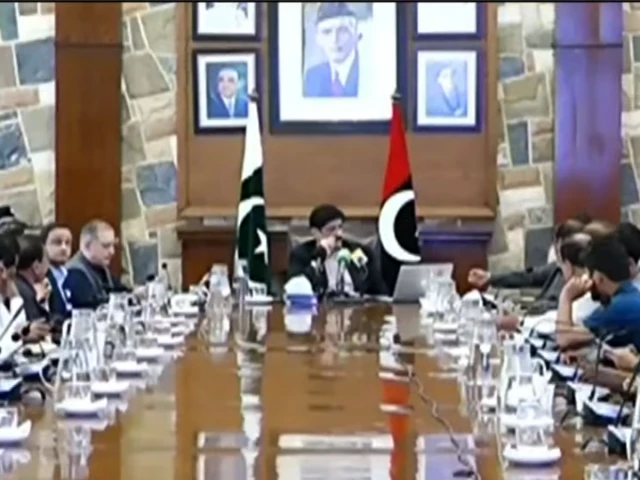
KARACHI – Sindh Chief Minister Murad Ali Shah on Monday inaugurated the People’s Motorcycle Fuel Subsidy Programme, demonstrating the registration process under which registered motorcycle owners would receive a subsidy of Rs57 per 20 litres of fuel. The provincial government will cover an additional Rs100 per litre, providing significant relief to bikers amid record-high petrol prices.
In response to surging petrol prices and the ongoing energy crisis, the Sindh government announced on Friday a monthly subsidy of Rs2,000 for registered motorcyclists across the province. Public transport and goods transport operators will also receive monthly subsidies ranging from Rs70,000 to Rs100,000.
On Thursday, the government further increased petrol prices by Rs137 per litre to a record-high of Rs458.4. It was the second major increase in fuel prices in less than a month. However, on Friday night, PM Shehbaz announced an Rs80 per litre reduction in the petroleum levy on petrol.
Registration Process
During a demonstration for journalists, Shah said that the scheme had officially started. “I am registering the first motorcycle to show the process,” he said. He also confirmed that the Rs500 transfer fee had been abolished.
To qualify for the subsidy, residents must have motorcycles registered in their name. Applications can be submitted through the Excise Department’s online portal, while a mobile application will become operational within three days. A guidance video explaining the registration process is also available on the Excise Department website.
Shah said that excise offices across Sindh would remain open until midnight, including on weekends, to ensure accessibility. Subsidy payments will be transferred directly into applicants’ bank accounts, and IBANs must be provided during registration.
Tracking and Verification
Shah explained that “once all required information is submitted, a message and a tracking ID number will be received” to help applicants monitor the status of their subsidy. To ensure accurate payments, “emails will be sent to Sindh Bank every three hours” to process the payments. He warned that “payments will be halted if accurate information is not provided.”
Ownership verification will include checking that the bank account matches the registered motorcycle. Accounts held with Sindh Bank will be confirmed within 24 hours, while verification and payment for accounts in other banks may take up to three days.
A dedicated toll-free helpline has been established to assist applicants and ensure data accuracy throughout the registration process.
Financial Relief for Motorcyclists
Shah emphasized that the initiative aimed to provide financial relief to motorcycle owners amid rising fuel costs, while ensuring transparency and efficient disbursement of subsidies.
Speaking on the impact of rising fuel costs, Shah warned, “Due to expensive fuel, the prices of flour and pulses will rise. We are not providing assistance to transporters but directly to poor passengers,” underlining the province’s focus on supporting the most vulnerable.
The chief minister also said the Sindh government was trying to ensure that “the poorest of the poor receive direct relief” and confirmed it would continue discussions with the federal government to align on policy measures.
Support for Farmers and Transport Sector
Shah said support for farmers would begin by Wednesday, with Rs3 billion allocated for the initiative. The provincial government has also set aside Rs13.4 billion for the motorcycle subsidy programme aimed at easing the burden of rising fuel costs.
Rs3-4 billion would be spent to stabilize transport fares, while the Sindh government alone plans to allocate Rs14.3 billion for the transport sector. “Nationwide, total spending on subsidies is expected to reach Rs55 billion,” Shah said.
Coordination with Federal Government
“The federal government will reimburse the provinces, and for this, the coordination between the centre and provinces is ongoing,” Shah said. He stressed that while the province respects federal authority, Sindh had sought to implement measures tailored to its own economic and social circumstances.
Shah said that during talks with traders, the Sindh government presented the federal government’s proposals. “Only two trader groups agreed to end their protest, on the condition that the price increase be reversed, while other associations assured the government they would not stage protests.”
He added that Sindh proposed to provide a targeted subsidy for the poorest segments of society only, but it was not agreed upon by the other provinces and the federal government.
Future Considerations
“We will sit with the federal government and decide about closing businesses soon, taking into account the situation in our province and in Karachi,” the Sindh CM said, indicating that further measures may be considered depending on how the energy crisis evolves.
Analysis: Targeted Relief in a Time of Crisis
The Sindh government’s motorcycle fuel subsidy programme represents a targeted approach to providing relief to the segment of society most affected by rising fuel prices. For millions of Pakistanis, motorcycles are not a luxury but a necessity—the primary mode of transport for workers, delivery riders, and low-income families.
The decision to link the subsidy to vehicle registration and bank accounts reflects an attempt to ensure that relief reaches intended beneficiaries while minimizing fraud. The use of an online portal and mobile application, along with extended hours at excise offices, suggests an awareness of the need to make the registration process accessible.
The warning that payments will be halted if inaccurate information is provided underscores the government’s concern about fraud. However, it also places a burden on applicants to ensure their information is correct, which may be challenging for those with limited digital literacy.
The allocation of Rs13.4 billion for the motorcycle subsidy programme, along with Rs3-4 billion for transport fare stabilization and Rs3 billion for farmer support, represents a significant financial commitment by the Sindh government. Whether these funds will be sufficient, and whether the federal government will reimburse provinces as promised, remains to be seen.
For the motorcyclists of Sindh, the subsidy offers some relief from record-high petrol prices. But as Shah himself warned, “the prices of flour and pulses will rise” due to expensive fuel, meaning that the broader economic impact of the energy crisis will continue to affect households across the province.