DUBAI / GENEVA / TEHRAN / WASHINGTON:
US President Donald Trump has called on allied nations to join efforts aimed at securing the Strait of Hormuz, a critical global oil route, amid escalating tensions across the Middle East. His appeal comes as several European and NATO countries declined participation, ruling out any military mission.
Speaking at a White House event, Trump expressed frustration over what he described as a lack of enthusiasm from allies. He urged countries such as the United Kingdom and France to take a more active role, stressing that global cooperation was essential to maintain stability along the key shipping corridor, which handles nearly one-fifth of the world’s oil supply.
However, leaders across Europe signaled reluctance. British Prime Minister Keir Starmer stated that London was working on a diplomatic approach but ruled out NATO involvement. Similarly, German Chancellor Friedrich Merz made it clear that Berlin would not participate militarily, emphasizing that the conflict does not fall under NATO’s mandate.
Several other nations — including Japan, Australia, Poland, Spain, Greece, and Sweden — also distanced themselves from any direct military engagement.
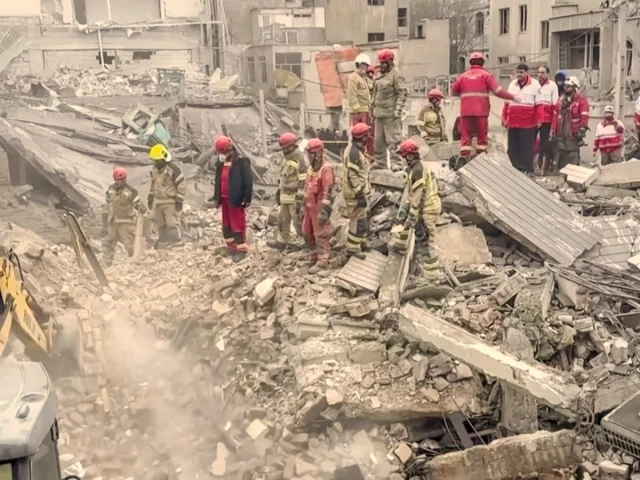
Meanwhile, tensions intensified as explosions were reported across Tehran, with air defence systems activated. Israel confirmed strikes targeting cities such as Shiraz and Tabriz. Iran responded with defiance, with Foreign Minister Abbas Araghchi warning that the country would continue defending itself regardless of escalation.
Iran’s Revolutionary Guards further escalated the situation by threatening US-linked businesses across the region, urging evacuations. The conflict has already spread beyond borders, with drone and missile incidents reported in the United Arab Emirates. A drone attack near Dubai International Airport caused a fuel tank fire, while a missile strike in Abu Dhabi killed a civilian. Another drone triggered a blaze near oil facilities in Fujairah.
Energy markets have also been impacted. The UAE’s state oil company ADNOC halted certain operations, while production levels dropped significantly due to security concerns and the disruption of shipping routes.
The broader conflict has engulfed much of the region. Iran claims to have launched hundreds of missiles and drones targeting multiple countries hosting US forces. Saudi Arabia reported intercepting more than 60 drones, while rocket attacks near Baghdad injured several people.
At the United Nations, Iran warned that its population faces serious danger due to ongoing strikes. Ambassador Ali Bahreini accused Western powers of aggression and cautioned that global indifference could set a dangerous precedent.
Despite the escalating violence, diplomatic efforts remain uncertain. Talks between global powers have yet to produce a coordinated response, while divisions among allies continue to complicate any unified strategy.