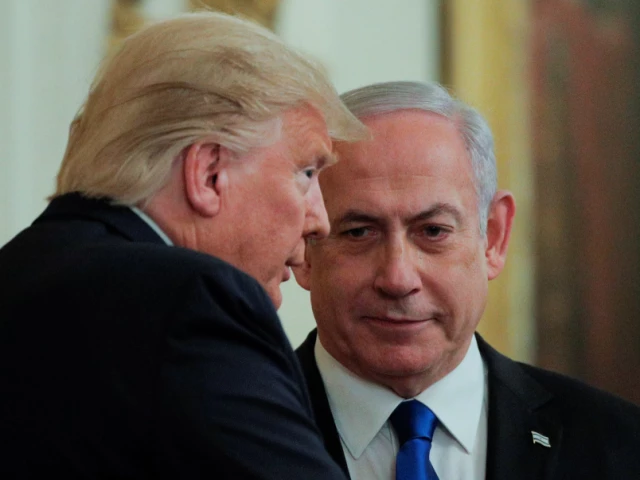
WASHINGTON/JERUSALEM: A reportedly heated exchange between US President Donald Trump and Israeli Prime Minister Benjamin Netanyahu has brought rare public attention to tensions between the two longtime allies, raising questions about the future direction of US-Israel relations amid ongoing regional conflicts.
According to reports, Trump angrily confronted Netanyahu during a phone call over Israeli threats to expand military operations in Lebanon, reportedly describing the Israeli leader as “crazy” and warning that continued escalation was damaging Israel’s international standing. The details of the conversation were first reported by Axios and later publicly acknowledged by Trump.
Heated Call Reveals Frustrations
Israeli officials familiar with the matter described the conversation as one of the most intense exchanges between the two leaders in recent years.
The dispute reportedly centered on Israeli plans to resume airstrikes in Beirut’s southern suburbs amid ongoing tensions involving Hezbollah and regional ceasefire negotiations. Trump urged restraint, arguing that further escalation could undermine efforts to end the conflict.
The US president was quoted as telling Netanyahu that growing international criticism of Israel was becoming increasingly difficult to manage.
Political Impact in Israel
The leaked details have generated significant political debate inside Israel, where opposition figures accused Netanyahu of allowing Washington excessive influence over Israeli military decisions.
Opposition leader Yair Lapid criticized the situation, suggesting Israel risked appearing overly dependent on US approval for security decisions.
Some members of Netanyahu’s own coalition also expressed concern about the perception that Israel’s military operations could be constrained by American pressure.
Growing Differences Over Regional Strategy
While Trump has frequently described Netanyahu as a close ally and has strongly supported Israel during regional conflicts, several policy differences have emerged in recent months.
Analysts point to disagreements over Lebanon, Iran, Syria, and ceasefire arrangements as signs that the two leaders are not fully aligned on every aspect of regional strategy.
Trump has repeatedly emphasized his desire to reduce tensions and pursue diplomatic solutions, while Netanyahu has maintained a more aggressive security posture regarding Iran and Hezbollah.
Iran and Lebanon at the Center
The tensions come as Washington continues indirect negotiations with Tehran aimed at ending the wider regional conflict and restoring stability in the Gulf.
Iran has reportedly linked broader peace negotiations to an end to Israeli military operations against Hezbollah in Lebanon, making the Lebanese front a key component of ongoing diplomatic efforts.
Israeli officials have argued that any pause in operations must be matched by a halt in Hezbollah attacks against northern Israel.
Election Pressures Mount
The dispute arrives at a politically sensitive moment for Netanyahu.
Recent polls suggest his coalition government faces significant electoral challenges, with public debate increasingly focused on the outcome of ongoing conflicts and Israel’s relationship with Washington.
Political observers note that maintaining strong ties with the White House remains a crucial element of Netanyahu’s electoral strategy, particularly as Israel approaches another highly contested election cycle.
Allies Despite Differences
Despite the public disagreement, officials on both sides insist that the US-Israel alliance remains strong.
Sources familiar with the relationship described Trump and Netanyahu as continuing to maintain direct and candid communication, while acknowledging occasional tactical disagreements.
Netanyahu has repeatedly referred to Trump as one of Israel’s strongest supporters, while US officials have emphasized that strategic cooperation between the two countries remains intact despite policy differences.