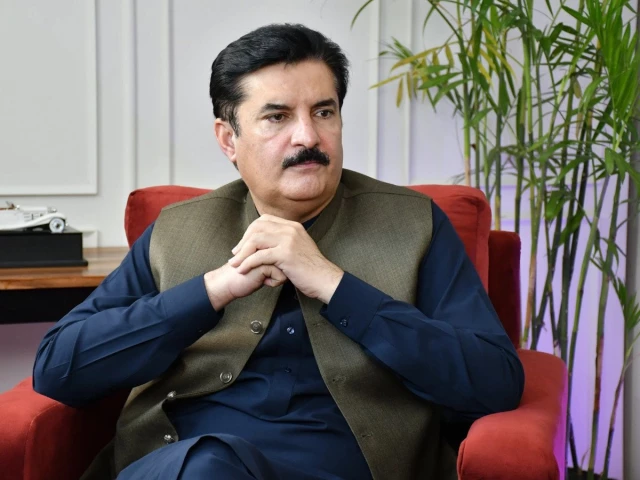
LARKANA – Khyber-Pakhtunkhwa Governor Faisal Karim Kundi has emphasised that there is a need to resolve political matters within the constitutional framework and promote national unity, warning against the politics of agitation and street protests.
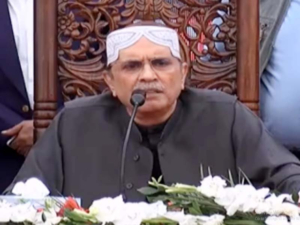
Speaking to the media in Jacobabad after offering condolences on the death of Mir Ijaz Khan Jakhrani’s son, Kundi said political differences should not be addressed through abuse or street tensions, but rather raised with arguments within constitutional forums, particularly institutions like the Council of Common Interests.
Criticism of Long Marches
He criticised certain political groups for announcing long marches, saying such actions appear aimed at gaining political benefits rather than solving public issues. Without naming any specific party, Kundi’s remarks appeared directed at opposition parties that have announced protest movements against the federal government.
Call for Constitutional Resolution
The governor stressed that political matters should be resolved through dialogue and constitutional mechanisms, not through street agitation. He specifically mentioned the Council of Common Interests (CCI) as an appropriate forum for addressing inter-provincial and federal-provincial issues.
Context of Political Tensions
Kundi’s comments come amid heightened political tensions. The PTI has announced plans for protests and long marches, while the government has warned against attempts to destabilise the country.
The governor, a member of the Pakistan Peoples Party (PPP), has previously called for political reconciliation. His latest remarks reinforce the PPP’s position that political issues should be resolved through parliamentary means rather than street power.
Analysis: A Call for Dialogue
Governor Kundi’s call for national unity and constitutional resolution of political matters reflects the PPP’s approach to the current political crisis. Unlike the PTI, which has relied on street protests and long marches, the PPP has consistently advocated for dialogue and parliamentary politics.
The reference to the Council of Common Interests is strategic. The CCI is a constitutional body that brings together federal and provincial governments to resolve disputes. Kundi’s suggestion that political issues should be raised there implies that the opposition should use institutional mechanisms rather than street power.
The criticism of long marches as “politically motivated” is a direct challenge to the PTI’s protest strategy. Kundi argues that such actions do not solve public issues but are designed for political gain.
The call for national unity is timely. The country faces significant economic and security challenges; political stability is essential for addressing them.
Whether Kundi’s call will be heeded is uncertain. But the message is clear: the PPP believes in dialogue, not disruption.