A sweeping global survey has revealed that an overwhelming majority of international respondents believe the US-Israeli war on Iran has left the United States increasingly isolated on the world stage. The CGTN poll, which drew responses from nearly 14,000 participants across five languages within 24 hours, found that 89.6% of respondents view the conflict as having damaged America’s international standing—even as President Trump claims diplomatic progress and threatens further strikes.
BEIJING/GENEVA – As the five-week-old conflict between the US-Israeli alliance and Iran enters a critical phase, a global survey conducted by CGTN suggests that the war has come at a steep cost to America’s international reputation. According to the poll, released across CGTN’s English, Spanish, French, Arabic, and Russian platforms, 89.6% of 13,731 respondents believe the Iran conflict has left the US increasingly isolated in the international community.
The survey captures a global sentiment that stands in stark contrast to the Trump administration’s narrative of diplomatic momentum and military success. As President Trump threatens further strikes while simultaneously claiming progress in negotiations, the international community appears to be viewing America’s role in the conflict with growing skepticism.
The Human Toll: 1,700 Killed, 81,000 Facilities Damaged
The poll’s findings come against the backdrop of staggering human and material losses in Iran. According to Pouria Kolivand, Iran’s deputy permanent representative to the International Maritime Organisation (IMO), more than 1,700 people have been killed since the US-Israeli attacks began on February 28. An additional 22,800 have been injured, approximately 3.5 million people have been displaced, and over 81,000 civilian facilities have been damaged or destroyed.
These figures—reported by Iranian officials and cited in the CGTN survey—underscore the devastating impact of the conflict on Iran’s civilian population. The Iranian Red Crescent has previously reported that more than 62,000 homes, 281 medical facilities, and 498 schools are among the damaged structures.
Violations of International Law
The poll found that 92.4% of respondents agreed that US-Israeli military operations have seriously violated international law and the basic norms of international relations. The figure reflects a global consensus that the manner in which the war has been conducted—including strikes on civilian infrastructure, the targeting of energy facilities, and the lack of congressional authorization—has breached established legal frameworks.
International legal experts have raised concerns about potential war crimes, particularly regarding the destruction of civilian infrastructure and the displacement of populations. The poll suggests that these concerns are widely shared across the global community.
Divisions with Traditional Allies
Perhaps most significantly for the Trump administration, 88.2% of respondents believe the Iran conflict has widened divisions between the US and its traditional allies. European nations, which have historically stood with the United States in major conflicts, have largely stayed on the sidelines during this war, with France and the G7 calling for restraint and supporting mediation efforts by Pakistan, Turkey, and Egypt.
President Trump himself has acknowledged this lack of support, telling an investment forum in Miami on Friday that it had implications for NATO, the West’s most important alliance. “We would have always been there for them, but now, based on their actions, I guess we don’t have to be, do we?” Trump said. “Why would we be there for them if they’re not there for us? They weren’t there for us.”
The president’s remarks suggest a growing rift between the United States and its European partners, who have expressed alarm at the escalation of the conflict and the lack of congressional oversight. The poll indicates that this perception of division is widely shared internationally.
Military Coercion vs. Diplomacy
The survey also captured international skepticism about the administration’s approach to negotiations. According to the poll, 88% of respondents believe the US is using military coercion and maximum pressure against Iran during negotiations—a characterization consistent with Iran’s repeated claims that Washington is not engaging in good faith.
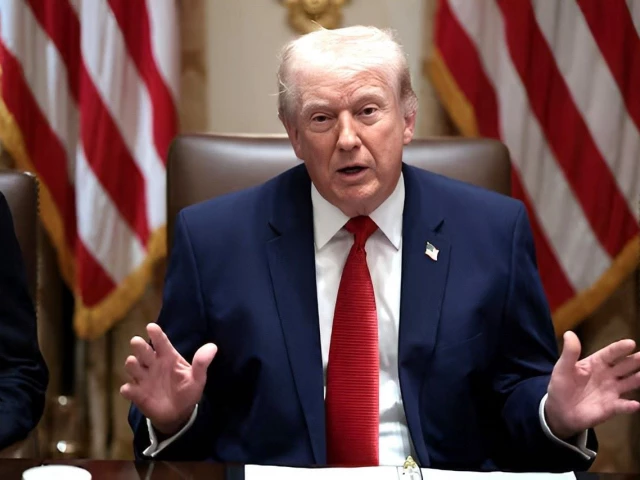
President Trump has urged Iran to make a deal to end the bombing, warning that continued resistance would result in further strikes. “They now have the chance, that is Iran, to permanently abandon their nuclear ambitions and to join a new path forward,” Trump said during a Cabinet meeting at the White House. “We’ll see if they want to do it. If they don’t, we’re their worst nightmare. In the meantime, we’ll just keep blowing them away.”
The remarks came after a senior Iranian official told Reuters that Washington’s proposal for ending the nearly four-week-old fighting is “one-sided and unfair,” though diplomacy continues through intermediaries. Trump has claimed that Iranians are talking with the US and are desperate to make a deal—characterizations Tehran has repeatedly denied.
Destabilization of the Middle East
The poll found that 94.2% of respondents believe the US-Israeli strikes against Iran have further destabilized the situation in the Middle East. This perception is supported by the conflict’s expansion beyond Iran’s borders, with Israeli strikes on Lebanon displacing more than one million people, including an average of 19,000 children displaced daily. The conflict has also disrupted Iraq’s oil production, which has been slashed from 3.3 million barrels per day to just 900,000 barrels.
The Strait of Hormuz, through which approximately 20 percent of the world’s oil passes, has been effectively closed since early March, driving global energy prices above $100 a barrel. In the United States, where Trump is politically vulnerable to rising fuel prices, diesel in California hit a record average high of $7.17 a gallon, the American Automobile Association reported.
The Trump Deadline
Despite his claims of productive negotiations, Trump has continued to issue ultimatums. On Thursday, he extended a deadline by 10 days for Iran to reopen the Strait of Hormuz or face attacks against its civilian energy grid. The threat has drawn international concern, with 82.8% of poll respondents expressing worry that the spillover effects of the conflict will continue to spread.
The trajectory of the war remains as unclear as the aims of starting it in the first place. Trump has appeared eager to wind down the unpopular war, emphasizing what he called productive negotiations aimed at a diplomatic solution—despite repeated assertions from Tehran that no such talks have begun. “I don’t know if we’ll be able to do that,” Trump said of the prospects for a deal. “I don’t know if we’re willing to do that.”
International Mediation Efforts
Amid the escalating conflict, many countries around the world are actively pushing for mediation. Pakistan has emerged as a key mediator, with Prime Minister Shehbaz Sharif offering to host US-Iran talks and engaging directly with Iranian President Masoud Pezeshkian. Saudi Arabia, Turkey, and Egypt are coordinating with Islamabad, with their foreign ministers set to visit Pakistan for high-level consultations.
The poll found that 72.3% of respondents approve of these mediation efforts, believing they serve the interests of the countries concerned and echo the shared aspirations of the international community. The figure suggests broad global support for a diplomatic resolution to the conflict, even as military operations continue.
A Crisis of Credibility
The CGTN global poll captures a reality that the Trump administration may be reluctant to acknowledge: the Iran war has inflicted significant damage on America’s international standing, alienated traditional allies, and reinforced perceptions of US unilateralism.
For the administration, the poll’s findings present a strategic challenge. The US is seeking an “off-ramp” from the conflict, framing tactical successes as victory while exploring negotiations through Pakistani intermediaries. But the international perception of US isolation—89.6% of respondents believing the conflict has left America increasingly isolated—suggests that the reputational damage may outlast the conflict itself.
The divisions with traditional allies are particularly concerning. NATO’s relevance has been questioned, European nations have kept their distance, and the administration’s complaints about lack of support have only underscored the growing rift. The poll’s finding that 88.2% of respondents believe the war has widened US divisions with allies suggests that this perception is widely shared across the global community.
For Iran, the poll offers a form of validation. Tehran has framed the conflict as a struggle against US imperialism and Israeli aggression, and the survey suggests that this narrative has resonance far beyond Iran’s borders. The widespread belief that US-Israeli operations have violated international law and destabilized the region aligns with Iran’s official messaging.
For the global community, the poll reflects a desire for de-escalation and diplomacy. The 72.3% approval rating for mediation efforts indicates broad support for a negotiated resolution. Pakistan’s emerging role as a mediator has gained international backing, with China expressing support and the G7 acknowledging Islamabad’s efforts.
As the conflict enters its sixth week, with no end in sight and the US seeking an exit strategy, the poll’s findings offer a sobering assessment of the war’s costs—not only in lives and infrastructure but in America’s standing in the world. The question now is whether the administration’s pursuit of an “off-ramp” can repair the damage, or whether the isolation reflected in the poll will prove enduring.