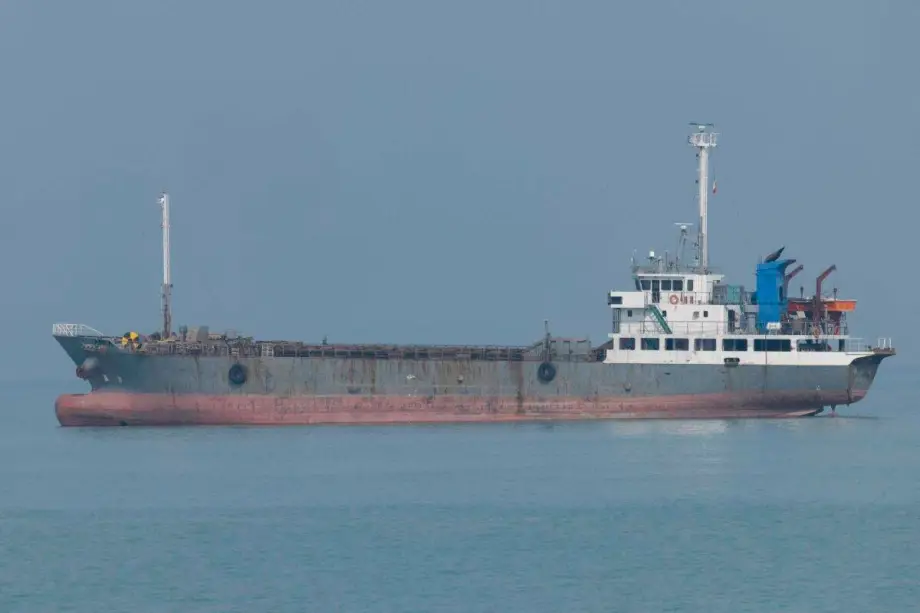
An Iranian supertanker carrying nearly $220 million worth of oil has successfully evaded US Navy blockade efforts, TankerTrackers reported Sunday. The vessel, identified as “HUGE,” is carrying over 1.9 million barrels of crude oil and is currently traversing Indonesian waters en route to the Far East.
“A National Iranian Tanker Company (NITC) VLCC supertanker carrying over 1.9 million barrels (valued at nearly $220 million dollars) of crude oil has managed to evade the U.S. Navy and reach the Far East,” TankerTrackers wrote on the social media platform X.
Vessel Movement and Tracking
The supertanker was last seen off Sri Lanka more than a week ago and is currently moving through the Lombok Strait in Indonesia toward the Riau Archipelago. The vessel has not transmitted Automatic Identification System (AIS) signals since March 20, when it departed the Strait of Malacca bound for Iran, according to maritime tracking information.
The use of “dark” or non-transmitting AIS operation is a common tactic employed by vessels seeking to avoid detection, particularly when attempting to evade naval blockades or sanctions enforcement.
Context of US Blockade
The successful evasion comes amid an ongoing US naval blockade of Iranian ports, which was imposed following the outbreak of war between the US-Israel alliance and Iran on February 28. The blockade is intended to prevent vessels from entering or leaving Iranian ports, and US forces have directed dozens of vessels to turn around or return to port since the blockade began.
However, Iran has continued to challenge the blockade. Earlier this month, Iran’s army announced that an Iranian tanker had managed to enter Iranian territorial waters despite US threats. The IRGC has also intercepted vessels in the Strait of Hormuz, and Iran has maintained its own restrictions on shipping through the strategic waterway.
TankerTrackers’ Track Record
TankerTrackers is a widely respected maritime intelligence service that specializes in tracking oil shipments, particularly those involving Iran, Venezuela, and other sanctioned nations. The service has previously documented numerous instances of Iranian oil shipments evading sanctions and naval interdiction.
This is not the first time a “dark” Iranian supertanker has successfully reached its destination during the current conflict. Despite the US blockade, Iranian oil continues to reach customers, primarily in Asia.
Analysis: The Limits of Naval Power
The successful evasion of a US Navy blockade by a VLCC supertanker — the largest class of oil tankers — highlights the challenges of maritime interdiction. The ocean is vast, and enforcing a blockade requires overwhelming naval resources, constant surveillance, and the cooperation of regional partners.
The use of “dark” AIS operations makes detection significantly more difficult. While the US Navy has advanced surveillance capabilities, tracking a single ship across thousands of miles of ocean is resource-intensive.
The fact that the tanker is now in Indonesian waters — far from the Gulf — suggests that it has already passed through the most dangerous part of its journey. Indonesia is not party to the US blockade, and its territorial waters are outside the scope of US enforcement.
For Iran, the successful delivery of the oil is both an economic necessity and a political victory. The revenue from the shipment — nearly $220 million — is a significant sum for an economy under sanctions. The evasion also demonstrates that the US blockade is not absolute.
As the ceasefire continues, the maritime cat-and-mouse game is likely to persist. Iran will continue to try to export oil; the US will continue to try to stop it. The “HUGE” may have evaded the blockade this time, but the next tanker may not be so lucky.