Pakistan’s top leadership has called for urgent national coordination to confront mounting economic and energy challenges, as rising global tensions and volatile oil markets place increasing pressure on the country’s fragile economy.
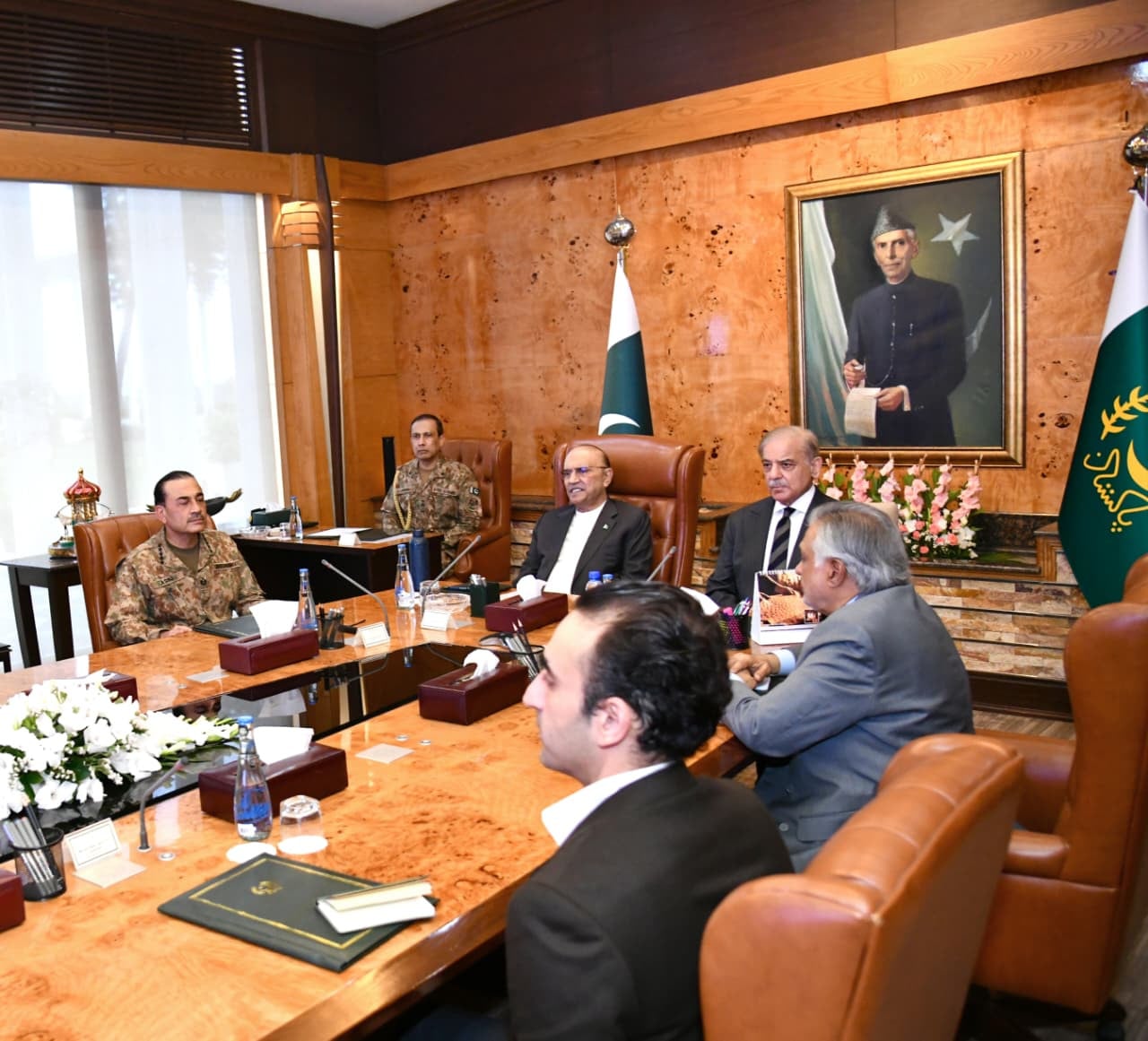
A high-level consultative meeting chaired by President Asif Ali Zardari at Aiwan-e-Sadr brought together key civilian and military figures to assess the evolving situation. Among those उपस्थित were Prime Minister Shehbaz Sharif and Chief of Army Staff Asim Munir, alongside senior cabinet members and economic policymakers.
Leadership Aligns on Economic and Energy Priorities
The meeting focused on the urgent need to stabilize Pakistan’s economy amid rising petroleum prices and disruptions in global energy supply chains. Officials reviewed the impact of fluctuating oil and gas markets, particularly in light of escalating geopolitical tensions affecting supply routes.
Participants emphasized that economic management, energy planning, and national security must be closely aligned. With inflationary pressures already affecting households, policymakers stressed the importance of coordinated action to cushion the impact on citizens.
Finance and petroleum authorities presented strategies aimed at controlling fuel prices, managing inflationary spillovers, and enforcing fiscal discipline through targeted austerity measures.
Rising Energy Costs Fuel Economic Concerns
Pakistan, a net energy importer, remains highly vulnerable to external shocks in global oil markets. The ongoing regional conflict—particularly tensions involving Iran and the United States—has disrupted supply chains and driven up energy costs worldwide.
Officials warned that sustained increases in fuel prices could ripple across key sectors, including transportation, agriculture, and manufacturing, potentially slowing economic growth and exacerbating inflation.
The leadership underscored the need for proactive planning to ensure energy security, including diversification of supply sources and efficient consumption strategies.
Public Measures and Consumption Awareness
In addition to macroeconomic policies, the meeting highlighted the importance of public cooperation in reducing energy demand. Authorities are expected to launch awareness campaigns encouraging citizens to conserve fuel, use public transportation, and adopt shared mobility solutions.
Such measures, officials noted, could play a crucial role in mitigating immediate pressures while longer-term solutions are developed.
Regional Security and Food Supply Risks
Beyond energy concerns, the meeting also addressed the broader regional security environment and its implications for Pakistan’s economy and food security. Disruptions in global trade routes and supply chains—particularly those linked to conflict zones—pose risks to the availability and affordability of essential commodities.
Participants agreed that a holistic approach is needed, integrating economic, energy, and food security policies to navigate the challenges ahead.
Pakistan’s Emerging Diplomatic Role
Separately, Pakistan signaled its growing involvement in diplomatic efforts to ease regional tensions. According to officials, indirect communication between Washington and Tehran is ongoing, with Pakistan acting as a conduit for message exchanges.
Support from other regional players, including Türkiye and Egypt, highlights a broader push for de-escalation through diplomatic channels.
However, mixed signals persist. While U.S. President Donald Trump suggested that Iran is open to a deal, Iranian Foreign Minister Abbas Araqchi has downplayed the exchanges, describing them as informal message relays rather than formal negotiations.
Institutional Coordination at the Core
A key takeaway from the meeting was the emphasis on institutional coordination. Leaders stressed that effective governance during times of crisis requires seamless collaboration between civilian authorities, the military, and economic institutions.
The call for national consensus reflects concerns that fragmented decision-making could hinder Pakistan’s ability to respond effectively to fast-evolving challenges.
Analysis: Pakistan Balances Crisis Management and Opportunity
Pakistan’s response to the current crisis highlights a delicate balancing act. On one hand, the country faces immediate economic risks from rising energy prices and regional instability. On the other, it has an opportunity to position itself as a constructive diplomatic player in a volatile geopolitical landscape.
The focus on coordination and consensus suggests an awareness that internal stability will be critical in navigating external shocks. At the same time, Pakistan’s role in facilitating indirect communication between global and regional powers could enhance its strategic relevance.
However, much will depend on how effectively the government implements its policy measures and whether global tensions ease in the coming weeks. With energy markets and regional security closely intertwined, Pakistan’s path forward remains tightly linked to developments beyond its borders.