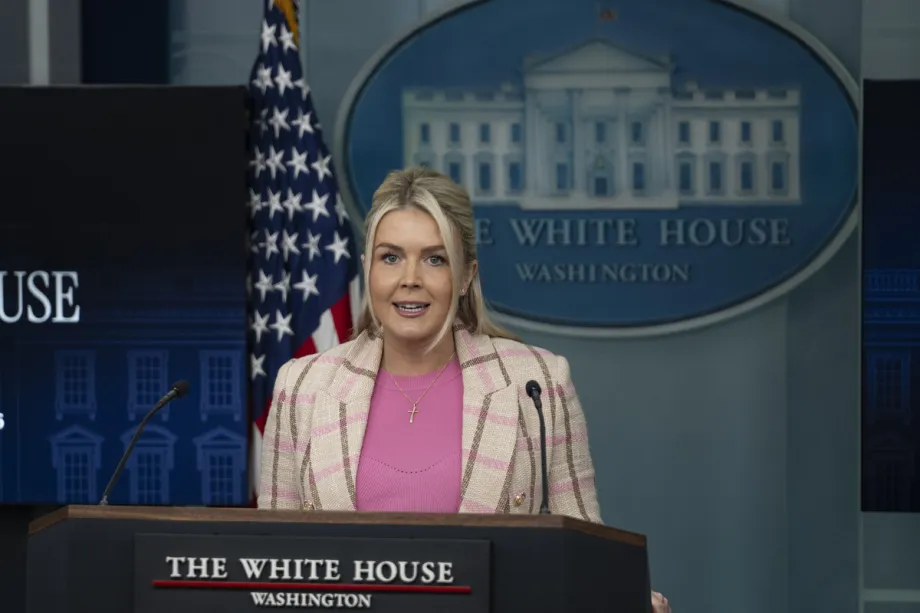
WASHINGTON, D.C. – In a press briefing that laid bare the high stakes of the ongoing Middle East conflict, White House Press Secretary Karoline Leavitt delivered a message of both diplomatic openness and military menace. Speaking to reporters Wednesday, Leavitt confirmed that Washington had postponed planned strikes on Iranian power plants and energy infrastructure following “productive conversations” over the past three days, but warned that patience has limits.
“If Iran fails to accept that it has been defeated militarily, President Trump will ensure the country is hit harder than they have ever been hit before,” Leavitt said. “The president does not bluff, and he is prepared to unleash hell.”
The spokesperson’s remarks represent the most explicit threat from the Trump administration since the conflict began on February 28, while simultaneously leaving the door open for a negotiated settlement. The dual-track approach—offering diplomacy while brandishing the threat of overwhelming force—has been a consistent feature of Trump’s foreign policy approach, but the latest warnings carry added weight given the scale of US military operations already conducted.
The Scale of US Military Operations
Leavitt provided detailed figures on US military operations against Iranian forces, claiming the destruction of more than 140 Iranian naval vessels, including nearly 50 mine layers. She described the campaign as “the largest elimination of a Navy on the face of the planet in a three-week period since World War II.”
The spokesperson also revealed that over the weekend, the US dropped several 5,000-pound bombs on an underground facility used to store anti-ship cruise missiles and mobile missile launchers positioned along the Strait of Hormuz coastline. The strikes targeted Iran’s ability to disrupt shipping through the strategic waterway, which has been a central focus of the conflict.
Leavitt warned Tehran against “miscalculation,” claiming that Iran’s last miscalculation had cost the country its senior leadership, navy, air force, and air defense system. “Any further violence,” she said, “would be the result of Iran refusing to accept defeat and come to a deal.”
Congressional Authorization Not Necessary
In a significant assertion of executive authority, Leavitt stated that the administration does not consider congressional authorization “necessary” for strikes against Iran. The position reflects the White House’s interpretation of its powers under the Constitution and existing authorizations for the use of military force, but is likely to face scrutiny from lawmakers who have argued that any sustained military campaign against Iran requires congressional approval.
The spokesperson also acknowledged that no specific timeline exists for the first oil tanker to pass through the Strait of Hormuz, though officials are working to realize it “as quickly as possible.” The strait’s closure has been a central element of the conflict, with Iran effectively blocking the waterway since the US-Israeli strikes began.
The Vision for Iran’s Leadership
Leavitt outlined the administration’s vision for Iran’s future, saying Trump wants to see an Iranian leadership that is “much more favorable” to Washington, willing to cooperate with the United States, and no longer chanting “Death to America!”
The remarks suggest that the administration’s goals extend beyond ending the current conflict to fundamentally reshaping Iran’s political trajectory—an objective that would represent a significant escalation of US ambitions in the region.
At the same time, Leavitt emphasized that talks continue despite reports that Iran had rejected a US 15-point plan. Asked about Iranian state television reports that Tehran had rejected the proposal, she said: “They have not. Talks continue. They are productive, as the president said on Monday, and they continue to be.”
The 15-Point Plan and Iran’s Conditions
The US has reportedly sent Iran a 15-point plan outlining steps on Tehran’s nuclear and ballistic missile programs, as well as maritime security in the Strait of Hormuz. According to reports, Iran rejected the proposal, saying any ceasefire would occur on its terms and timeline, and outlined five conditions for ending the war, including a complete halt to “aggression and assassinations.”
Leavitt urged caution on the reported plan, saying she had seen a proposal “floated in the media” but that the White House had never confirmed it. “There are elements of truth to it, but some of the stories I read were not entirely factual,” she added.
On possible face-to-face talks, including reports of a potential meeting in Pakistan, Leavitt said nothing should be considered official until formally announced by the White House, cautioning against getting “ahead of our skis” on any talks planned for the weekend.
Dismissing Criticisms
The press secretary also dismissed claims by former counterterrorism director Joe Kent, who alleged that the US had shifted its red line from preventing a nuclear weapon to preventing nuclear enrichment to justify the war. Leavitt said Kent “resigned in disgrace,” calling his assertions “ridiculous and laughable,” and saying his accusations carry “zero credibility.”
Iran’s Parallel Accusations
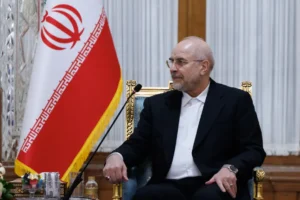
The White House’s强硬声明 came on the same day that Iran’s parliament speaker, Mohammad Bagher Qalibaf, accused the US and Israel of planning to occupy one of Iran’s islands with support from an unnamed regional country. Qalibaf threatened that any such move would trigger “relentless attacks” on the regional country’s “vital infrastructure.”
The parallel statements from Washington and Tehran underscore the volatile state of the conflict, even as diplomatic efforts continue. While both sides have expressed openness to negotiations, their public rhetoric suggests that significant gaps remain—and that the possibility of further escalation remains very real.
Pakistan’s Mediation Role
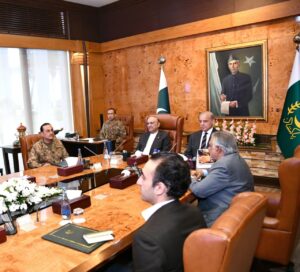
The White House’s acknowledgment that talks continue, and its caution about reports of potential meetings in Pakistan, reflects the delicate state of diplomatic efforts. Prime Minister Shehbaz Sharif formally offered Pakistan as a venue for US-Iran talks earlier this week—an offer that President Trump reposted on his Truth Social platform, signaling Washington’s openness to the initiative.
However, Iran’s hardened position—including its assertion of control over the Strait of Hormuz, its accusation of an island occupation plot, and its reported rejection of the US 15-point plan—suggests that Tehran may not be prepared to compromise on what it sees as fundamental strategic interests.
The Brink of Escalation
The White House’s warning that President Trump is prepared to “unleash hell” on Iran represents both a negotiating tactic and a genuine threat of escalation.
For the administration, the statement serves multiple purposes. Domestically, it reinforces Trump’s image as a leader who combines diplomatic openness with military resolve. Regionally, it warns Iran that the US is prepared to escalate if Tehran does not accept what the administration terms the “reality” of its military defeat. Globally, it signals to allies and adversaries alike that the US remains committed to its objectives despite the ongoing diplomatic efforts.
For Iran, the threat comes as Tehran has already hardened its own position, demanding substantial concessions and accusing the US and Israel of planning to occupy its territory. The gap between the two sides appears to be widening even as backchannel communications continue.
The White House’s assertion that talks remain “productive” suggests that the administration sees value in keeping diplomatic channels open. But the explicit threat of overwhelming force also reflects a calculation that Iran may only be brought to the negotiating table under the pressure of credible military action.
As the five-week conflict continues, with no end in sight and both sides issuing increasingly强硬 statements, the danger of miscalculation remains acute. Pakistan’s mediation efforts offer a potential off-ramp, but the gap between Washington’s demands and Tehran’s red lines remains formidable. Whether diplomacy can overcome these obstacles will determine whether the coming days bring a ceasefire or a catastrophic escalation.