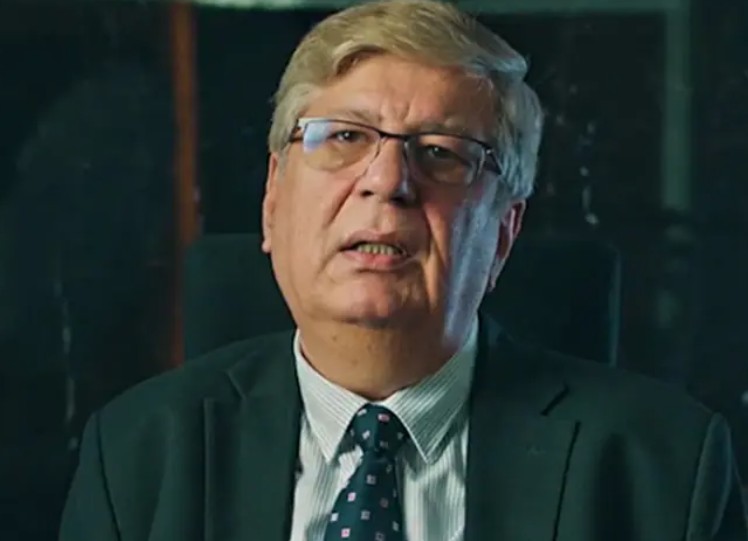
Renowned urologist Dr Asif Malik was seriously injured after unidentified assailants opened fire on him in Peshawar’s University Town area on Tuesday night, hospital and police officials said on Wednesday. The pioneer of kidney transplants in Khyber Pakhtunkhwa was shifted to Peshawar General Hospital (PGH) and is under treatment in the intensive care unit (ICU).
PESHAWAR – A statement issued by city police stated that an investigation team recovered three empty bullet shells of a pistol from the spot near Dr Malik’s home. A case has been registered on the urologist’s behalf. “CCTV footage is being obtained, and teams have been assigned the task to arrest those behind the attack,” City Police spokesperson Alam Khan told Dawn.
PGH, where Dr Malik offers his services, confirmed in a Facebook statement that he is stable. “The matter is being handled by the relevant authorities, and we are fully cooperating with them,” the hospital said, requesting the public to respect the privacy of Dr Asif and his family and urging social media users to avoid spreading unverified information or rumours.
Medical Community Shaken
According to the Young Doctors Association (YDA), Dr Malik was on his way back home when he came under attack near his house in University Town on Tuesday night. In an audio message, an office bearer of YDA said Dr Malik’s driver rushed him to the hospital, adding that all his vital organs were safe. “He himself walked and entered the emergency department of the hospital,” he said, noting that the doctor’s condition was satisfactory.
Dr Malik is a pioneer in the field of urology and kidney transplantation in Khyber Pakhtunkhwa. He served as director of the Institute of Kidney Diseases in Peshawar and was the first head of the Medical Transplantation Regulatory Authority (MTRA). He played a vital role in initiating legal organ transplants in the province and helped private hospitals establish renal transplant units in Peshawar.
Family Legacy of Service and Sacrifice
Dr Asif Malik is a close relative of former KP police chief Malik Naveed and senior KP police official Malik Saad, who embraced martyrdom in a suicide attack in Peshawar in 2007. Malik Asad, former Kohat nazim and brother of Malik Saad, was also killed in April last year when unidentified persons attacked his vehicle on Rawalpindi Highway.
The attack on Dr Malik is the latest in a series of violent incidents targeting medical professionals and government officials in Khyber Pakhtunkhwa.
Recent Attacks on Medical Professionals
Over a week ago, a dialysis technician identified as Mohammad Arif Wazir was shot dead by unidentified assailants in the Wana tehsil of Lower South Waziristan district. On March 18, KP Food Safety and Halal Food Authority Director General Kashif Iqbal Durrani was injured when unknown attackers opened fire on him in Peshawar. In late February, Dr Mehwish Hasnain was shot dead as she was going home after performing duty at a hospital in Kohat, leading to protests by her colleagues.
Investigation Underway
Police have formed teams to investigate the attack and apprehend the perpetrators. The recovery of three empty bullet shells and ongoing review of CCTV footage are expected to provide leads in the case. Authorities have not yet established a motive for the attack.
Analysis: A Disturbing Pattern
The attack on Dr Asif Malik represents a disturbing escalation in violence against medical professionals in Khyber Pakhtunkhwa. Dr Malik is not only a respected physician but also a pioneer who established kidney transplantation services in the province—services that have saved countless lives. The targeting of such a figure sends a chilling message to the medical community.
Dr Malik’s family has already paid a heavy price for public service, with relatives killed in terrorist attacks and targeted violence. That a member of this family should now be fighting for his life after another attack underscores the persistent security challenges facing Khyber Pakhtunkhwa.
For the medical community, the attack is a reminder of the risks faced by those who serve in the province. The recent killings and injuries of doctors, technicians, and health officials have created an atmosphere of fear that threatens to undermine healthcare delivery.
As police investigate, the focus will be on identifying the perpetrators and establishing the motive. For Dr Malik’s colleagues, patients, and family, the priority is his recovery. The province that he served for decades now waits anxiously for news of his condition.