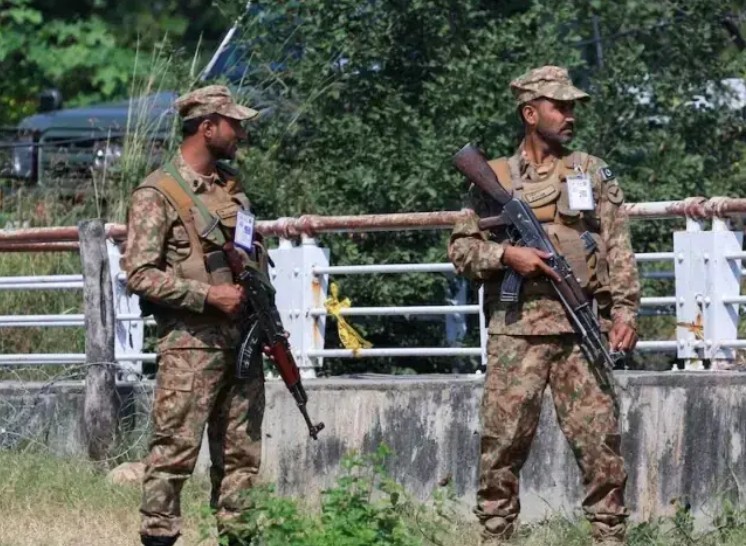
Security forces killed 13 terrorists in two separate engagements in Khyber Pakhtunkhwa, the Inter-Services Public Relations (ISPR) said on Wednesday. The operations took place on March 30, with the military’s media wing identifying the terrorists as belonging to “Indian Proxy Fitna al Khawarij”—the term the state uses for terrorists belonging to the banned Tehreek-i-Taliban Pakistan (TTP).
RAWALPINDI – During the first intelligence-based operation (IBO) conducted in the Bara area of Khyber district, security forces killed 10 terrorists. “During the conduct of operation, own troops effectively engaged khawarij location and after an intense fire exchange, 10 khawarij were sent to hell,” the ISPR said.
In a second IBO conducted in the Bannu district of the province, three additional terrorists were killed by security forces.
Sanitisation Operations Underway
The ISPR stated that sanitisation operations are being conducted to eliminate any other “Indian-sponsored kharji” found in the area. The counter-terrorism campaign is being conducted under the vision of “Azm-e-Istehkam”—as approved by the Federal Apex Committee on National Action Plan—which will continue “at full pace to wipe out the menace of foreign-sponsored and supported terrorism from the country.”
President, PM Commend Security Forces
President Asif Ali Zardari and Prime Minister Shehbaz Sharif commended the security forces for eliminating 13 terrorists, state-run Radio Pakistan reported. In their separate statements, they expressed unwavering national resolve to completely eliminate “foreign-backed terrorism.”
President Zardari asserted that operations against terrorists will continue to ensure national security and the protection of the people. Prime Minister Shehbaz said security forces were like a “solid wall against terrorism” for the country’s protection.
Rising Militancy in KP
Khyber Pakhtunkhwa has seen a significant rise in terrorist attacks over the past year. According to the Annual Security Report 2025 from the Centre for Research and Security Studies (CRSS), KP recorded a substantial surge in violence last year as “fatalities rose from 1,620 in 2024 to 2,331 in 2025.”
Due to a resurgence of militancy, especially in KP and Balochistan, where attacks often target security personnel and law enforcement agencies, the state has intensified counter-terrorism operations across the country.
Recent Counter-Terrorism Operations
The latest operations follow a series of successful counter-terrorism actions by security forces in KP. On March 15, security forces killed five terrorists during an IBO in Lakki Marwat. A week before that, 13 terrorists were eliminated in five separate operations across the province.
Analysis: Sustained Counter-Terrorism Campaign
The elimination of 13 terrorists in two operations within a single day reflects the sustained intensity of counter-terrorism operations in Khyber Pakhtunkhwa. The ISPR’s use of the term “Indian Proxy Fitna al Khawarij” signals the state’s framing of the TTP as a foreign-sponsored entity, linking the militancy in KP to external actors.
The operations in Bara and Bannu—two districts that have historically been affected by militancy—demonstrate the security forces’ ability to conduct intelligence-based operations across the province. The success of these operations relies on timely intelligence, effective coordination between security forces and law enforcement agencies, and the support of local populations.
As sanitisation operations continue, the focus will be on eliminating remaining terrorist networks and preventing future attacks. For the people of KP, who have borne the brunt of terrorist violence over the past two decades, the successful operations offer some reassurance that the state remains committed to their security.
The commendation from the president and prime minister underscores the political leadership’s support for the security forces’ counter-terrorism efforts. As Pakistan navigates multiple challenges—including the economic fallout of the Middle East conflict and ongoing diplomatic efforts to mediate between the US and Iran—maintaining internal security remains a critical priority.