The UN Relief and Works Agency (UNRWA) has warned that political and economic pressures have led to a 20 percent reduction in services provided to Palestinian refugees, amid a deepening financial crisis. Jonathan Fowler, Acting Director of Communications at UNRWA, said in a press interview that the agency is facing mounting challenges that threaten its ability to continue operations across its five fields of operation.
Fowler stated that UNRWA has been subjected to targeted smear campaigns aimed at undermining its role and credibility, alongside increasing financial constraints. The agency, which provides education, healthcare, relief, and social services to millions of registered Palestinian refugees, has faced repeated funding shortfalls in recent years, exacerbated by the suspension of contributions from key donor countries.
Erosion of International Law
Fowler also warned of a broader erosion of international law, noting that violations are no longer met with attempts at justification, as was previously the case. “In the past, when international law was violated, there was at least some embarrassment,” Fowler said. “Today, however, we are faced with a reality where some openly say they are not bound by it.”
He cited the Israeli authorities’ takeover and demolition of UNRWA offices in East Jerusalem as a key example, describing it as a clear violation given the agency’s status as a United Nations body. Fowler emphasized that targeting UNRWA facilities effectively constitutes targeting UN infrastructure, noting that East Jerusalem is regarded under international law as occupied territory.
The Impact of Service Cuts
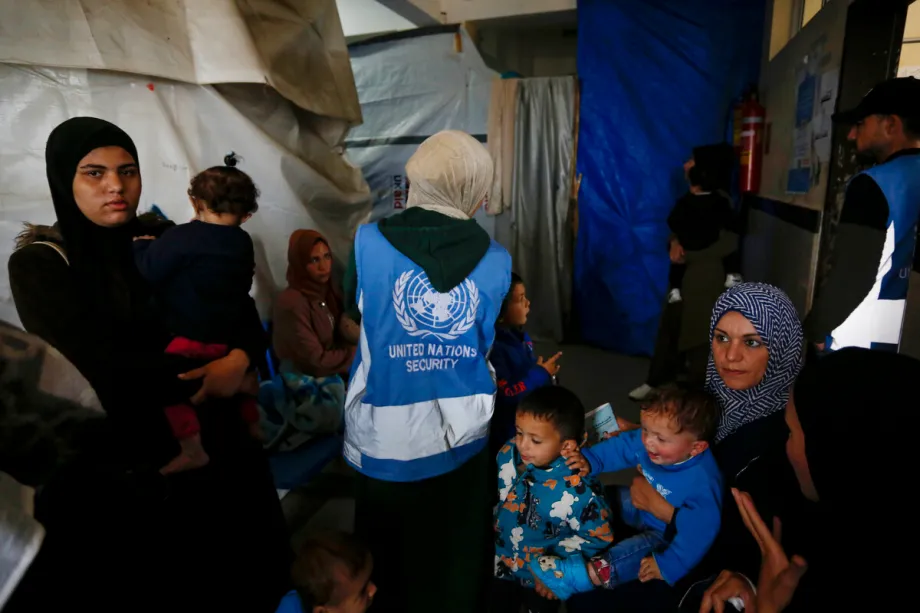
The 20 percent reduction in services will have severe consequences for Palestinian refugees across the Gaza Strip, West Bank, Jordan, Lebanon, and Syria. UNRWA operates over 700 schools serving more than 500,000 children, 140 primary health clinics, and provides emergency food and cash assistance to the most vulnerable refugee families.
Service cuts are likely to affect:
- Education: Reduction in school hours, increased class sizes, or school closures
- Healthcare: Reduced operating hours at clinics, fewer medical supplies, and limited specialized services
- Emergency relief: Decreased food and cash assistance for the most vulnerable families
- Infrastructure: Delayed maintenance and repairs of refugee camps
The Funding Crisis
UNRWA has historically been funded almost entirely by voluntary contributions from UN member states, with the United States, Germany, and the European Union among the largest donors. However, funding has become increasingly unreliable in recent years.
The Trump administration suspended US contributions to UNRWA in 2018, and while some funding was later restored, the agency has never fully recovered. Additional suspensions of funding by other donor countries, often in response to Israeli political pressure or allegations about UNRWA’s operations, have created a chronic funding crisis.
The current crisis has been deepened by the broader Middle East conflict, as donor countries redirect resources to humanitarian responses in other parts of the region or face their own domestic economic pressures.
Political Pressure on UNRWA
UNRWA has long been a target of Israeli political and diplomatic campaigns. Israel has accused the agency of perpetuating the refugee issue, allowing militant activity in its facilities, and using educational materials that incite against Israel. UNRWA has consistently denied these allegations, stating that it operates under strict neutrality principles and that its schools follow UN educational standards.
Fowler’s reference to “targeted smear campaigns” reflects the agency’s view that political opposition to its existence has intensified, threatening not only its funding but its very mandate from the UN General Assembly.
East Jerusalem: A Flashpoint
The Israeli takeover and demolition of UNRWA offices in East Jerusalem, which Fowler cited as a key example of international law violations, represents a significant escalation. East Jerusalem is considered occupied territory under international law, and UNRWA’s presence there has been a point of contention for years.
The demolition of UNRWA facilities in East Jerusalem is part of a broader pattern of Israeli actions in the city, including settlement expansion and the eviction of Palestinian families from their homes. For UNRWA, the loss of office space in East Jerusalem disrupts its ability to coordinate services for Palestinian refugees in the city and the West Bank.
A Crisis of Legitimacy and Funding
UNRWA’s warning of a 20 percent cut in services comes at a time when the need for its services has never been greater. The Gaza Strip, where over 70 percent of the population are registered refugees, has been devastated by the 2023-2025 war and is still recovering. In the West Bank, Israeli military operations and settlement expansion have restricted movement and economic opportunity. In Lebanon and Syria, Palestinian refugees face economic hardship and political marginalization.
The funding crisis is not merely a budgetary issue; it is a political one. Donor countries that have suspended contributions have often done so under political pressure from Israel and its allies. The “targeted smear campaigns” that Fowler references have successfully eroded political support for UNRWA in key donor capitals, even as the humanitarian needs of Palestinian refugees have grown.
The erosion of international law that Fowler describes is a broader trend that predates the current conflict but has been accelerated by it. When states openly declare that they are not bound by international legal obligations, the entire framework of post-World War II international order is threatened. UNRWA, as a UN agency operating in a highly politicized environment, is particularly vulnerable to this trend.
For the millions of Palestinian refugees who depend on UNRWA for education, healthcare, and food, the 20 percent service cut is not an abstraction. It means fewer children in school, shorter clinic hours, and less food on the table. It means a further erosion of their already precarious existence.
As UNRWA struggles to maintain its operations, the international community faces a choice: provide the funding necessary to sustain services for Palestinian refugees, or watch as another UN agency is crippled by political pressure and financial constraint. The consequences of the latter choice will be borne by the most vulnerable people in one of the world’s most volatile regions.